Deep Dive into Anti-Counterfeit Label Technology: From Holograms to Blockchain
Counterfeit goods devour over two trillion dollars from the global economy each year. From physical security features to digital traceability systems, modern anti-counterfeit label technology is building a layered defense for brand protection. What is the latest state of this technological arms race?
Counterfeit goods are a cancer on the global economy. According to a joint study by the Organisation for Economic Co-operation and Development (OECD) and the European Union Intellectual Property Office (EUIPO), global trade in counterfeit and pirated goods has surpassed the two-trillion-dollar mark, accounting for approximately 3.3% of world trade. This figure represents not merely billions of dollars in direct revenue losses for brand owners each year, but a grave threat to consumer health and safety — from hundreds of thousands of annual deaths caused by fake pharmaceuticals to traffic accidents triggered by counterfeit automotive parts, the harm wrought by counterfeit goods extends far beyond the economic realm.
In this ongoing war of offense and defense, anti-counterfeit label technology serves as a critically important first line of defense. From ancient wax seals to today's multi-layered systems integrating nanomaterials, optical engineering, cryptography, and blockchain, labeling technology has evolved into a highly interdisciplinary field. This article will systematically dissect the technology stack of modern anti-counterfeit labels — from physically visible security features, to covert markers detectable only with specialized equipment, to digital traceability systems connecting the entire supply chain.
I. Physical Anti-Counterfeit: The First Visible Barrier
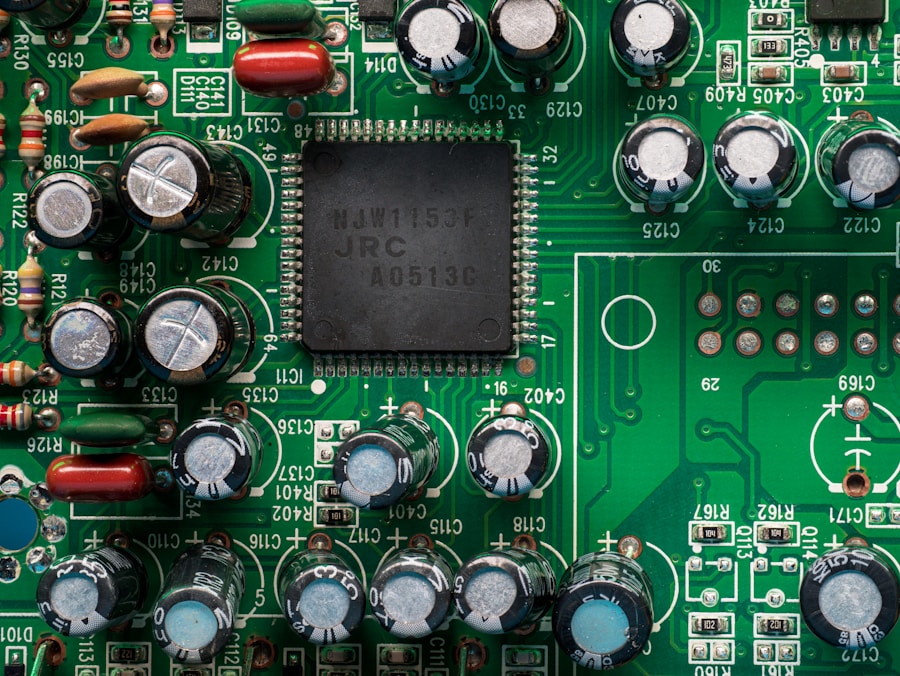
Holographic Technology: The King of Optical Security
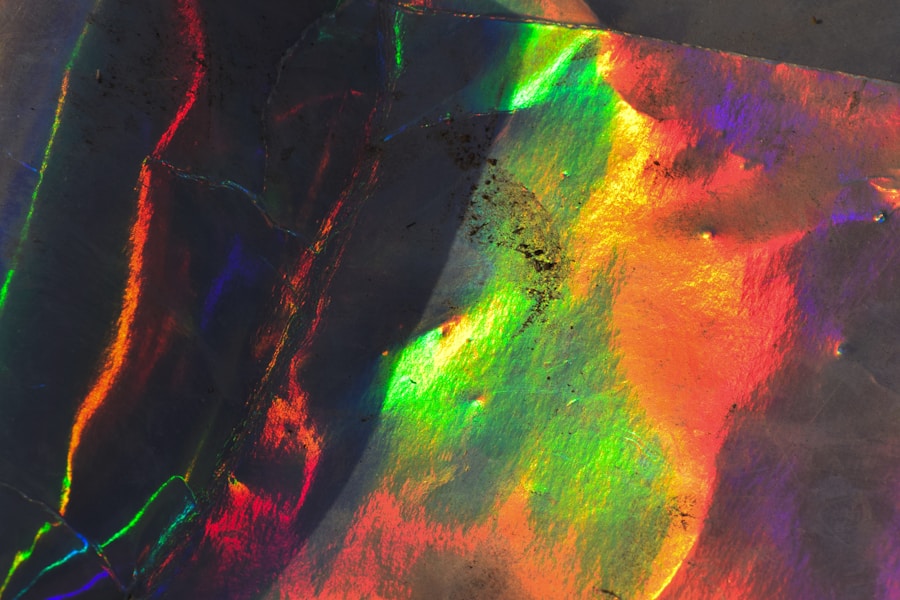
Holographic Security is the most widely deployed technology in the physical anti-counterfeit label domain. Its fundamental principle leverages laser interference to record the amplitude and phase information of light waves on ultra-fine structures (typically at the nanometer scale), producing three-dimensional optical effects recognizable to the naked eye when illuminated by white light. Modern holographic security labels have evolved far beyond early simple rainbow holograms, developing into a multi-tiered technology ecosystem.
Dot-Matrix Hologram technology uses computer-controlled electron beam etching systems to precisely arrange millions of tiny grating dots (each approximately 10-100 micrometers in size), with each dot independently controllable in its diffraction angle and direction, thereby constructing holographic images of extremely high resolution. This technology enables holograms to exhibit dynamic flip effects, hidden patterns, and multi-channel information — displaying entirely different images or text at different viewing angles.
E-beam Lithography Hologram represents a higher security tier. By writing nanoscale patterns directly onto photoresist using an electron beam (feature sizes can go below 50 nanometers), it produces ultra-fine structures that conventional optical holography cannot replicate. The production equipment for this technology costs tens of millions of dollars, effectively elevating the manufacturing barrier to a national-level capability.
Optically Variable Ink: The Chemistry of Color-Shifting
Optically Variable Ink (OVI) is another highly mature physical anti-counterfeit technology. Its core material is a multi-layer thin-film interference pigment — a nanoscale stack of alternating metallic reflective layers and transparent dielectric layers. As incident light passes through these film layers, the different dielectric thicknesses selectively reflect and interfere with specific wavelengths, causing dramatically different colors to appear at different viewing angles.
The most familiar application of this technology is on banknotes worldwide. For instance, the Liberty Bell motif on the $100 bill employs an OVI effect that shifts from copper to green. In the label sector, OVI is widely deployed on premium spirits, tobacco, and luxury packaging, typically serving as the "first verification layer" — consumers need no tools at all, simply tilting the label to observe the color shift for an initial authenticity check.
"Truly effective anti-counterfeiting is not a single technological barrier, but a system that forces counterfeiters to face a different type of challenge at every layer — optical, chemical, digital, supply chain. The more layers, the higher the economic cost of forgery, until it exceeds the profit threshold of counterfeiting.
Security Threads & Microtext: Hidden Within the Fibers
Security thread technology originated in banknote protection and has since been widely transplanted to high-security label applications. Modern security threads are narrow strips embedded within the substrate (not surface-applied), typically 1-4mm wide, capable of integrating metallized patterns, holographic effects, fluorescent inks, and even micro-electronic components. Their key security characteristic is that the integrated structure of thread and substrate makes it impossible to simply "peel off" and "transplant" — tearing the substrate breaks the thread simultaneously, creating irreversible evidence of tampering.
Microtext (Microprinting) exploits the natural resolution limit of the human eye (approximately 300 micrometers) as an inherent security barrier. Text or patterns printed at extremely small font sizes (typically 0.15-0.25mm character height) appear to the naked eye as nothing more than a fine line, yet become clearly legible under a magnifying glass. High-resolution offset or intaglio printing achieves sharp, crisp microtext, while scanners and ordinary printers — limited by their resolution — produce copies with blurred edges and broken characters, providing an effective means of authentication.
Physical Anti-Counterfeit Technology Comparison
| Technology | Security Level | Verification | Replication Difficulty |
|---|---|---|---|
| Hologram | High | Naked Eye | Requires specialized lithography equipment |
| OVI | High | Tilt Observation | Thin-film interference pigments patent-controlled |
| Security Thread | Very High | Transmitted Light | Embedded structure cannot be separated |
| Microtext | Medium-High | Magnifier Check | Scan-copying introduces distortion |
| Tamper-Evident | Medium | Visual Inspection | Moderate materials engineering barrier |
II. Digital Anti-Counterfeit: Bridging Physical and Virtual Trust
Blockchain Traceability: The Immutable Chain of Trust
The application of blockchain technology in anti-counterfeit traceability is rapidly progressing from proof-of-concept to scaled deployment. Its core value proposition is creating an "immutable digital biography" for every product unit in the supply chain — from raw material procurement through manufacturing, warehousing, logistics, distribution, and ultimately consumer purchase, every critical node is permanently recorded as an encrypted transaction on a distributed ledger.
In practical label integration, each anti-counterfeit label is assigned a unique identifier bound to a blockchain address (typically presented as a QR code or NFC tag). As the product moves through the supply chain, every scan, transfer, and verification operation is recorded as an on-chain transaction. At the point of purchase, consumers simply scan the QR code on the label to view the complete journey from origin to hand, with the blockchain's consensus mechanism ensuring these records have not been tampered with by any single party.
Alibaba's "Ant Chain" platform has provided blockchain traceability for over 100 million cross-border products; the AURA blockchain platform jointly launched by LVMH, Microsoft, and ConsenSys serves product authentication for luxury brands including Louis Vuitton and Dior. The core challenge for these platforms lies in the "first mile problem" — how to ensure data authenticity before it goes on-chain, i.e., how to create an inseparable bond between the physical label and its digital identity.
Digital Watermarking: The Invisible Information Layer
The application of digital watermarking in anti-counterfeit labels represents a modern practice of steganography. Unlike directly visible security features, digital watermarks encode information as modifications to packaging print patterns so subtle they are imperceptible to the naked eye — for example, introducing systematic micro-shifts in pixel brightness, color saturation, or geometric position within printed images.
Digimarc's Enhanced Barcode is the benchmark solution in this domain. Its technology encodes product identification information (such as GTIN) with full redundancy across the entire packaging surface's print pattern, so that any partial area of the packaging carries the complete identification data. Consumers or supply chain participants can quickly read the data from any angle using smartphones equipped with specialized SDKs. This technology has been deployed across billions of retail product packages and is becoming one of GS1's recommended "next-generation barcode" candidates.
Case Study: NFC Chips in Premium Spirits
Kweichow Moutai Group has embedded NFC anti-counterfeit chips in the cap of its Feitian Moutai bottles since 2013. Each chip stores a unique encrypted identifier, and consumers simply hold their phone near the cap to trigger the verification process. The system processes over 500,000 daily verifications and has cumulatively identified and prevented millions of counterfeit bottles from reaching the market. The key advantage of the NFC chip lies in its "single-opening" design — once the cap is removed, the chip's antenna loop is physically destroyed, its status irreversibly changing to "opened," effectively breaking the counterfeiting chain of empty bottle recovery and refilling.
NFC & RFID: Near-Field Trust Protocols
NFC (Near Field Communication) anti-counterfeit labels represent a deep fusion of physical anti-counterfeiting and digital verification. An NFC tag is essentially a micro-integrated circuit containing a security chip with cryptographic capabilities (typically compliant with ISO 14443 or ISO 15693), deriving its power via inductive coupling from the RF field of the reading device (e.g., a smartphone) to complete data communication.
Unlike ordinary RFID tags, anti-counterfeit-grade NFC tags have a built-in cryptographic engine supporting AES-128 or higher encryption algorithms, capable of executing "challenge-response" authentication protocols. During verification, the smartphone sends a random number (challenge) to the NFC tag; the tag signs the random number using its securely stored private key and returns it (response); the phone verifies the signature validity using the corresponding public key. This process ensures that even if an attacker clones the tag's UID (Unique Identifier), they cannot replicate its internal key — achieving chip-level anti-counterfeiting.
III. Covert Features: The Last Line of Forensic Defense
Beyond physically visible features and consumer-operable digital verification, high-security anti-counterfeit systems typically include one or more layers of "covert features" — detectable only by brand quality control teams or law enforcement agencies using professional instruments — serving as the "ultimate weapon" against organized counterfeiting operations.
Fluorescent & Phosphorescent Markers: UV fluorescent and IR up-conversion materials are the most common covert marking technologies. Specific fluorescent compounds are incorporated into printing inks or coatings at extremely low concentrations — completely invisible under normal lighting but emitting characteristic fluorescent signals when excited by specific UV or IR wavelengths. By customizing the excitation/emission spectra of these compounds, brand owners can create covert marks with unique "spectral fingerprints."
DNA & Chemical Taggants: Embedding synthetic DNA sequences or unique chemical molecular taggants in a label's ink or adhesive represents the highest level of forensic anti-counterfeiting technology. Applied DNA Sciences' (APDN) SigNature DNA technology has been deployed for the U.S. military's supply chain security, with plant-sourced synthetic DNA fragments embedded in ink that can be identified through PCR amplification at a forensic standard. The cost of replicating this technology is prohibitively high — counterfeiters would need not only to know the DNA sequence itself (which is proprietary information) but also possess molecular biology-grade fabrication capabilities.
Terahertz Taggants: Special materials operating in the terahertz (THz) frequency band represent a cutting-edge research frontier. Due to the high cost and low availability of terahertz detection equipment, using material particles with specific THz responses as anti-counterfeit markers creates an extremely high technical barrier. Researchers are developing processes to incorporate THz-sensitive nanoparticles into label materials — these particles exhibit identifiable absorption or reflection characteristics in the terahertz band while remaining completely transparent in the visible and near-infrared spectrum.
"The value of covert anti-counterfeit features lies not in whether consumers can identify them, but in ensuring counterfeiters never know what they have missed. This information asymmetry is the core deterrent power of forensic-grade security systems.
IV. Pharmaceuticals: Serialization & Aggregation Tracking
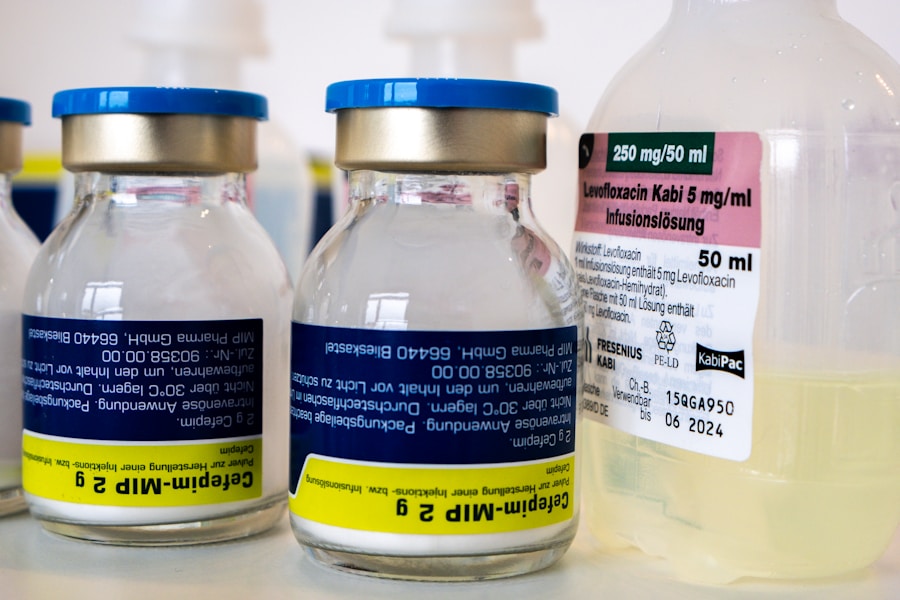
The pharmaceutical industry represents the most stringent and systematized domain for anti-counterfeit label technology. The fake drug crisis involves not merely economic losses but direct threats to human life — the World Health Organization estimates that approximately 10% of medicines worldwide are counterfeit or substandard, with this figure exceeding 30% in low- and middle-income countries. An estimated one million people die from falsified medicines each year.
To address this global public health crisis, multiple countries and regions have implemented or are implementing pharmaceutical serialization regulations: the U.S. Drug Supply Chain Security Act (DSCSA) required full manufacturer-to-pharmacy serialization tracking by November 2023; the EU Falsified Medicines Directive (FMD/2011/62/EU) mandates an "end-to-end verification" system requiring every prescription medicine box to have its serial number decommissioned at the point of sale; China's pharmaceutical traceability initiative requires manufacturers to assign a unique tracking code to every smallest saleable unit.
At the label technology level, pharmaceutical serialization demands that every packaging unit (smallest saleable unit) carries a unique serial number, typically printed as a 2D Data Matrix code on the packaging, with encoded content conforming to GS1 standards (including GTIN, serial number, batch number, and expiration date). The more advanced "aggregation tracking" requirement establishes parent-child relationships between individual units and case packaging, and between cases and pallets — when a case is opened, the system automatically associates the case-level serial number with all individual serial numbers inside, enabling complete traceability of any single medicine box's journey through the supply chain.
Global Pharmaceutical Serialization Regulations
- US. Drug Supply Chain Security Act (DSCSA) — Full supply-chain serialization & interoperability, fully effective November 2023.
- EU. Falsified Medicines Directive (FMD) — End-to-end verification system, per-box decommissioning for Rx drugs, operational.
- CN. Pharmaceutical Traceability System — Smallest saleable unit coding, covering production-distribution-use chain.
- IN. India Export Drug Serialization — Level-by-level tracking requirements for exported pharmaceuticals.
- RU. Russia's Chestny ZNAK System — Mandatory digital marking & tracking platform covering pharmaceuticals and multiple categories.
V. Luxury Brands: Anti-Counterfeit Label Strategies
The luxury goods industry is among the hardest hit by counterfeit products globally. Research by Frontier Economics estimates that counterfeit luxury goods cost legitimate brands over 98 billion euros in annual revenue. Yet luxury brands face a unique paradox: the presence of anti-counterfeit labels must not compromise the product's aesthetic value or consumer experience — no customer wants to see an industrial-grade holographic sticker on a Hermès Birkin bag.
This contradiction has spurred a wave of "invisible authentication" innovations. LVMH Group's approach involves miniaturizing NFC chips and embedding them within the lining of leather goods or into label webbing — consumers can verify authenticity through the brand's official app with a simple tap, while the chip itself remains entirely invisible. Gucci has adopted a "dual QR code" strategy on select products — one visible QR code linking to a product information page, while another UV-fluorescent QR code invisible to the naked eye serves as an internal traceability tool for the brand.
More noteworthy is how luxury brands are transforming anti-counterfeiting from a cost center into a value-added customer experience. When consumers scan a product label for authenticity verification, brands seize the opportunity to simultaneously deliver personalized services: product care guides, limited-edition release reservations, pre-owned resale certification, and even blockchain-based Digital Certificates of Ownership. This "verify-to-connect" strategy is upgrading the anti-counterfeit label from a security tool to a CRM touchpoint.
VI. Consumer Verification UX: The Scan-to-Verify Philosophy
The effectiveness of anti-counterfeit technology ultimately depends on whether consumers are willing and able to use it easily. A technically impeccable system requiring five steps to complete verification may prove far less effective in practice than a simple "scan and go" solution. The importance of user experience design in the anti-counterfeit domain is being recognized by an increasing number of brands.
"Zero-Friction Authentication" is the core principle of current anti-counterfeit UX design. The ideal consumer verification flow should satisfy three criteria: first, no dedicated app download required (leveraging the phone's native camera or NFC capability as the trigger); second, verification results delivered within 3 seconds; third, results that are intuitively clear — a green checkmark for authentic, a red cross for suspect — requiring no specialized knowledge to interpret.
In the Chinese market, WeChat and Alipay Mini Programs provide a natural "super-gateway" for anti-counterfeit verification. Consumers scan a product QR code within WeChat and can complete verification, view traceability information, and access product knowledge directly within the mini program, all without leaving the WeChat ecosystem. This verification architecture built on existing social platforms dramatically lowers the consumer adoption barrier while providing brands with a direct communication channel to their customers.
VII. Building a Multi-Layer Defense: Methodology
No single anti-counterfeit technology can provide absolute security. The core principle of modern anti-counterfeit practice is "Defense in Depth" — combining multiple security features based on different principles and operating at different verification levels to build a comprehensive system that forces counterfeiters to face a different type of challenge at every layer.
Three-Layer Security Architecture
Consumer self-verifiable: holograms, OVI, tamper-evident structures, QR code scan-to-verify.
Simple tool verification: UV fluorescent marks, microtext, IR features, security threads.
Professional lab equipment required: DNA taggants, THz markers, chemical tracers, nano-encoded particles.
The key methodological principles for implementing a multi-layer system include: Technological Complementarity — each layer's security features should be based on different physical, chemical, or digital principles, so that mastering one replication technique does not enable breaching other layers; Economic Deterrence Gradient — as the security layers deepen, replication costs rise exponentially until counterfeiting investment exceeds potential profit; Verification Accessibility Design — the overt layer faces all consumers, the semi-covert layer targets brand market surveillance teams, and the forensic layer serves judicial enforcement agencies, with verification complexity at each tier matched to the professional capability of its intended users.
In the digital age, a "digital connectivity layer" is superimposed atop this three-tier framework — using blockchain, cloud platforms, and IoT technology to aggregate verification data from all physical security features onto a unified digital platform. Every consumer scan verification, every supply chain scan, and every brand inspection data point is uploaded in real time and linked to the product's digital identity. This "physical + digital" convergence not only strengthens the reliability of anti-counterfeiting but provides brand owners with unprecedented market intelligence — which regions show high counterfeit activity, which channels carry parallel-import risks, and the spatiotemporal distribution patterns of consumer verification behavior.
The future of anti-counterfeit label technology is no longer confined to the single objective of "preventing counterfeits." It is evolving into a comprehensive platform integrating brand protection, supply chain visibility, consumer engagement, and market intelligence. On this platform, every label ceases to be a passive identity marker and becomes an active information node — connecting the bond of trust between brands and consumers.