Linerless Labels: The Last Mile to Zero-Waste Packaging
The global labeling industry generates over 400,000 tonnes of release liner waste annually. Linerless technology is eliminating this waste at its root — but what it truly reshapes is not just material structure, but the operating logic of the entire value chain.
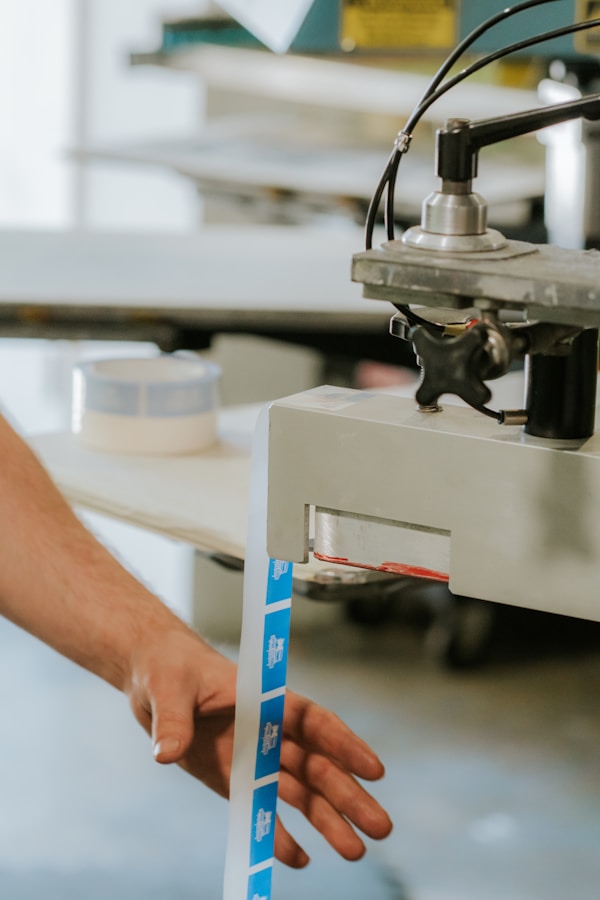
In the global pressure-sensitive label supply chain, there is one material that almost never enters the consumer's field of vision, yet year after year exits the production process in staggering volumes as waste — the release liner (also known as backing paper or siliconized carrier). This thin sheet of paper or film serves a singular mission: protecting the adhesive layer of self-adhesive labels during die-cutting, transportation, and storage. The moment a label is applied to a product, its liner is discarded. The global label industry consumes roughly four million tonnes of pressure-sensitive facestock annually, generating an estimated 400,000-plus tonnes of release liner waste. Because of their silicone coating, these liners resist conventional paper recycling and are unsuitable for composting — most end up in incinerators or landfills.
Linerless labels were conceived precisely to address this structural waste. The core idea is elegantly simple: if a thin silicone release layer can be coated directly onto the back of the label facestock, allowing the web to self-wind, store, and slit without a separate liner, then the release liner can be eliminated from the label construction entirely. Each roll of linerless labels yields 40%-60% more label length than a same-diameter conventional roll (because the liner's thickness is removed), reducing changeover frequency, cutting logistics costs, and zeroing out liner waste generation.
Yet behind this seemingly straightforward structural change lies a comprehensive redesign of coating processes, adhesive chemistry, printability, cutting methods, and labeling equipment. Linerless labeling is not simply a matter of "removing one layer" — it is a systemic reconstruction of the entire label production and application value chain. This is why, despite the concept originating in the 1990s, the linerless segment has only entered its true growth phase in the last five years, propelled by the dual forces of sustainability imperatives and technological maturation.
The Technology: How Do Labels Roll Without a Liner?
Understanding linerless labels begins with the three-layer architecture of conventional pressure-sensitive labels: facestock (the printable layer), adhesive layer, and release liner (silicone-coated backing). During application, the label is peeled from the liner, exposing the adhesive, and pressed onto the product surface. The liner serves two critical functions: preventing the adhesive from bonding to the back of the facestock during storage, and providing stable peel force and tension control on high-speed applicators.
The linerless solution coats an ultrathin silicone release layer onto the face (print side) of the facestock. When the web self-winds, the adhesive of one layer contacts the silicone-coated face of the layer beneath — achieving "self-release" without sticking. At the application stage, purpose-built linerless applicators equipped with silicone-coated cutting blades and guide rollers use integrated knives to cut labels on demand (replacing conventional pre-die-cutting), then apply them to products.
Linerless vs. Conventional Labels: A Structural Comparison
- 01. Material layers: Conventional labels have 3 layers (facestock + adhesive + liner). Linerless labels have 2 (silicone-coated facestock + adhesive).
- 02. Labels per roll: Same-diameter rolls yield 40%-60% more label length with linerless, directly reducing logistics and changeover costs.
- 03. Cutting method: Conventional labels are pre-die-cut. Linerless labels are cut on demand, enabling variable-length labels.
- 04. Waste: Conventional labels produce liner waste (30%-40% of total label weight). Linerless labels achieve zero liner waste.
- 05. Equipment compatibility: Linerless labels require dedicated applicators with silicone-coated blades — they cannot run on conventional equipment.
The most visible benefit of this structural change is waste elimination. But in practice, logistics efficiency gains are equally significant. Consider a food packaging line producing one million labels per day: switching to linerless increases the labels per pallet by approximately 50%, reducing warehouse footprint and shipping frequency, while changeover downtime drops by roughly 30% thanks to longer rolls. These seemingly incremental efficiencies compound into substantial cost savings at industrial scale.
Market Landscape: From Niche to Mainstream
According to the latest Smithers Pira market report, the global linerless label market reached approximately $2.3 billion in 2024, representing about 4.5% of the global pressure-sensitive label market. This share is expanding rapidly — projected to grow at an 11.8% CAGR to $4.8 billion by 2030, pushing market share above 7.5%.
By application, linerless label adoption follows a clear logic: penetrate first where print-quality demands are modest but cost and efficiency sensitivity is extreme, then extend toward higher-value applications. Today, the three core segments are logistics weigh-price labels (approximately 45% of market share), food retail price labels (roughly 30%), and baggage tags/receipts (about 15%).
In logistics, the explosive growth of global e-commerce has become the strongest tailwind for linerless labels. Sorting centers operated by Amazon, JD.com, and SF Express process millions of parcels daily, each generating a strip of release liner waste from its shipping label. Amazon announced in 2023 that it would deploy linerless shipping labels across its global fulfillment network — a single initiative projected to eliminate approximately 15,000 tonnes of liner waste annually. SF Express began piloting linerless thermal label systems in its South China sorting centers in 2024, with nationwide coverage planned by 2026.
"Linerless labeling is not a 'substitute' — it is the technological lever for the label industry's transition from a linear to a circular economy. When you eliminate the single largest waste stream in the entire supply chain, you change not just the bill of materials, but the industry's cost structure and environmental equation.
In food retail, linerless penetration in supermarket weigh-price printing is already substantial. Equipment manufacturers DIGI (Teraoka Seiko), Bizerba, and Mettler-Toledo launched linerless-compatible weigh-label printers over a decade ago. In Europe, major chains such as Lidl, Carrefour, and Coop have converted more than 60% of their fresh-food weigh labels to linerless formats. These labels use direct thermal printing — no ribbon, no liner — delivering measurable consumable cost savings and waste reduction at every store location.
Technical Challenges: Four Mountains to Cross
Despite a compelling market outlook, linerless labels face four core technical challenges on the road to broader adoption, each requiring coordinated breakthroughs in material science, equipment engineering, and application development.
Mountain One: Printability. The silicone release layer on the face of linerless facestock is a natural barrier to ink and coating adhesion. Conventional flexographic and offset inks exhibit poor wetting and adhesion on silicone surfaces, resulting in insufficient image sharpness and durability. This is why most linerless labels today rely on direct thermal printing (the thermal coating is applied on top of the silicone layer) rather than multicolor printing. To address this, suppliers including HERMA and Ritrama are developing "selective silicone coating" technology — applying silicone only in non-print zones while preserving the standard facestock surface in print areas. Technically more complex, this approach enables linerless construction and high-quality multicolor flexo printing to coexist.
Mountain Two: Adhesive Exposure. In conventional labels, the release liner shields the adhesive from dust, moisture, and temperature fluctuations. In linerless labels, the adhesive is briefly exposed between cutting and application. While the exposure window is extremely short, adhesive performance stability remains an engineering challenge in hot, humid, or dusty environments. Adhesive suppliers Henkel and H.B. Fuller are developing "delayed activation" formulas for linerless applications — adhesives that maintain low tack at ambient conditions and rapidly build final bond strength upon compression, reducing sensitivity during the exposure window.
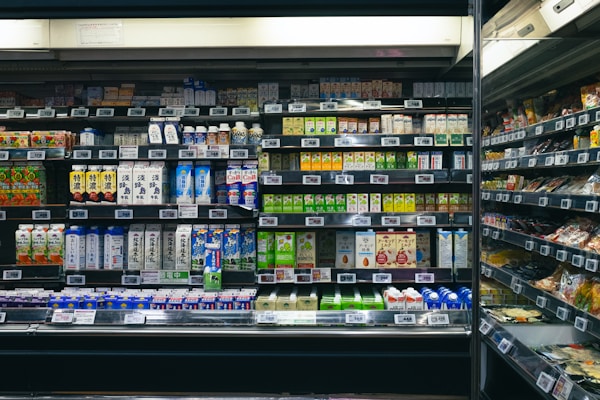
Mountain Three: Equipment Investment. Linerless labels require purpose-built applicators — silicone-coated blades, specialized tension-control systems, and non-stick guide rollers that cannot be retrofitted onto conventional labeling machines. For manufacturers with large installed bases of conventional equipment, the capital expenditure for conversion is a significant switching cost. Equipment makers Espera, HERMA, and Ravenwood are lowering this barrier through modular designs — offering linerless modules that can be integrated into existing labeling lines rather than requiring full-line replacement.
Mountain Four: Shape Limitations. Conventional labels can be pre-die-cut into any shape — round, contoured, windowed — while linerless labels, cut inline, are currently limited to rectangles. This is a non-issue in logistics and retail weighing, but a significant constraint in beverages, cosmetics, and consumer electronics where label geometry is central to brand expression. Some equipment manufacturers are developing integrated laser die-cutting and linerless solutions, aiming to combine the waste advantages of linerless construction with free-form cutting — but this remains at the laboratory stage, with industrial-scale production still years away.
Regulatory Tailwinds: How PPWR Elevates Linerless Strategy
The passage of the EU Packaging and Packaging Waste Regulation (PPWR) is creating unprecedented policy tailwinds for linerless labels. PPWR explicitly prioritizes "reduction" as a primary objective, mandating a 15% decrease in total packaging waste by 2040 versus a 2018 baseline. Under this framework, release liners — as the single largest waste stream in the label supply chain — have been brought under the regulatory spotlight for the first time.
Quantified Environmental Benefits of Linerless Labels
France implemented a PPWR-aligned Extended Producer Responsibility (EPR) fee differentiation system in 2024, granting EPR fee discounts of 15%-20% for packaging that uses linerless labels. For large food manufacturers consuming tens of millions of labels annually, switching to linerless reduces not only waste-handling costs but also unlocks direct regulatory incentives. Italy, Spain, and Belgium are expected to follow suit with similar policies in 2025-2026.
In the Asia-Pacific region, China's "dual carbon" strategy and green packaging policies similarly provide a policy window. The China Packaging Federation's 2024 Green Packaging Evaluation Guidelines included "release liner reduction and substitution" as an assessment criterion for the first time. While currently voluntary rather than mandatory, the standard sends a clear directional signal to the label supply chain. Japan's revised Plastic Resource Circulation Promotion Act also references linerless labeling as a viable plastic-reduction pathway.
Supply Chain Dynamics: Who Is Leading?
Across the linerless label supply chain, several key nodes are experiencing structural shifts. On the facestock side, traditional pressure-sensitive giants — Avery Dennison, UPM Raflatac, and Lintec — have all established linerless product lines. Yet they face a structural tension: linerless growth partly cannibalizes their legacy adhesive-label (with liner) revenue base.
By contrast, a cohort of mid-size companies focused exclusively on linerless technology is winning through strategic purity. UK-based Ravenwood Packaging — built from inception around linerless applicator solutions — commands a leading market position in European food retail with its NOBAC applicator series and custom linerless facestocks. Finland's Max Solutions has established deep technical moats in linerless thermal facestock, with products maintaining stable silicone release performance and adhesive activity across a -40°C to +60°C temperature range.
"The linerless label market is traversing a classic technology-diffusion curve. Early adopters — logistics and retail weighing — have validated commercial viability. The next battleground is whether the industry can crack high-quality printing and free-form cutting to unlock the much larger branded consumer-goods market.
On the equipment side, DIGI (Teraoka Seiko), Bizerba, Espera, and Ravenwood form the first tier of linerless applicator manufacturers. Notably, the world's largest flexographic label press manufacturers — BOBST and Nilpeter — both launched linerless-compatible print/coat/cut integrated solutions in 2024, signaling upstream press manufacturers' strategic commitment to the trend.
2025-2030: The Critical Path from Niche to Mainstream
Synthesizing technology readiness, regulatory momentum, and market demand, linerless label development over the next five years will follow this trajectory:
Linerless Label Roadmap 2025-2030
- 2025 Half of the top 20 global e-commerce logistics operators complete full linerless shipping-label deployment. European food retail penetration exceeds 70%.
- 2026 Selective silicone coating reaches commercial-scale production; linerless labels enter multicolor flexographic printing for the first time. PPWR-linked EPR incentives roll out across major EU member states.
- 2027 Linerless share of the global pressure-sensitive label market exceeds 6%. First FMCG brand products with linerless labels reach retail shelves.
- 2028 Integrated laser die-cutting and linerless solutions complete industrial validation; free-form linerless labels enter the market.
- 2030 Global linerless label market reaches $4.8 billion. China, driven by dual-carbon policy, becomes the largest linerless label market in Asia-Pacific.
For label-industry practitioners, the rise of linerless technology carries a deeper signal: in an era where sustainability is shifting from "bonus" to "entry requirement," solutions that fundamentally eliminate waste — rather than merely reduce it — will capture disproportionate market returns. Linerless labels do not eliminate a material; they eliminate a paradigm of waste.
The release liner has existed in the label supply chain for more than half a century, its functional necessity unquestioned — until now. When a technology can maintain core functionality while reducing the largest single waste stream in its supply chain to zero, it ceases to be an "optional upgrade" and becomes an industrial inevitability. On the last mile to zero-waste packaging, linerless labels are paving the road at 12% annual growth. The question is not "whether," but "how fast."