
In 2024, China's cross-border e-commerce exports surpassed ¥2.5 trillion RMB ($350 billion), growing over 19% year-on-year. In this unprecedented wave of globalization, countless Chinese brands confronted foreign regulatory regimes for the first time. Many sellers quickly discovered that product quality alone is merely the price of admission — every line of text on the product label, every symbol, every language choice is what truly determines whether goods clear customs, reach retail shelves, and avoid litigation. Label compliance is the most overlooked yet most expensive hidden cost of cross-border e-commerce.
The US Market: FTC Labeling's Core Framework
The US product labeling regulatory system is distributed across multiple federal agencies, but for most consumer goods, the Federal Trade Commission (FTC) regulations form the foundational compliance framework. The FTC's core principle can be distilled into a single sentence: no claim on a label may be deceptive, and every claim must be supported by adequate substantiation.
For textiles and apparel, the FTC's Textile Fiber Products Identification Act requires labels to include: generic fiber names and percentages by weight (listed in descending order), the manufacturer or distributor's name or registered identification number (RN number), and country of origin. All information must be in English, permanently attached to the product (typically a sewn-in label), and remain legible throughout the product's useful life.
Regarding care labels, the FTC's Care Labeling Rule (16 CFR Part 423) mandates that all textile garments carry instructions for at least one appropriate care method. Labels may use text descriptions or ASTM D5489 standard symbols — the familiar five-icon system for washing, bleaching, drying, ironing, and professional care. Notably, the US care labeling system does not perfectly align with the international ISO 3758 standard: ISO's "natural drying" symbols use different graphic expressions than their ASTM counterparts. This discrepancy is one of the most common compliance blind spots for Chinese exporters.
US FTC Label Requirements Quick Reference: Textiles
- 01. Fiber content: List all fibers by generic name in descending order of weight percentage; fibers ≥5% must be individually named.
- 02. Country of origin: Must state "Made in [Country]" — vague terms like "Imported" are non-compliant.
- 03. Manufacturer identification: Company name or FTC-registered RN/WPL number.
- 04. Care instructions: At least one complete care method using ASTM D5489 symbols or equivalent English text.
- 05. Label format: Must be a permanently sewn-in label (hang tags alone are insufficient), legible through normal product lifespan.
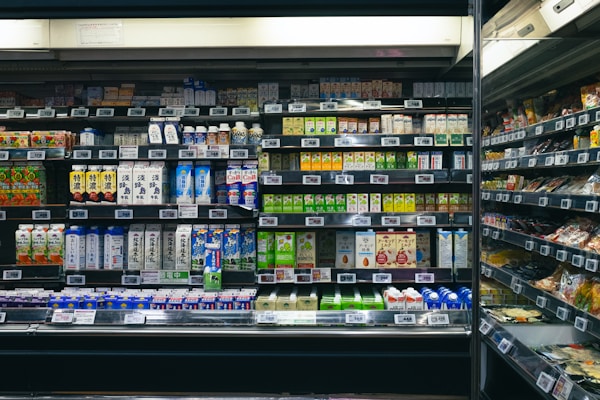
For food and dietary supplements, FDA labeling regulations are significantly more complex and stringent. The Nutrition Facts panel format is prescribed in exacting detail under 21 CFR 101.9 — from minimum font sizes (no smaller than 6pt Helvetica or equivalent), to line weights, nutrient ordering, and Daily Value percentages, all specified to the millimeter. The updated Nutrition Facts format effective January 2020 further emphasized separate "Added Sugars" declaration and mandatory Vitamin D and Potassium labeling. While the FDA offers 12-month transition periods for small businesses under $10 million in annual revenue, this grace period does not apply to cross-border sellers shipping via Amazon FBA — customs enforces full compliance at point of entry.
The EU Market: CE Marking and the Regulatory Jungle
The EU labeling compliance system is renowned for its comprehensiveness and rigor. The CE marking (Conformité Européenne) is the mandatory product conformity marking for entering the European Economic Area (EEA), covering over 20 product directive categories including toys, electrical and electronic equipment, personal protective equipment, and medical devices. The CE marking is not "issued" by a third party — it is a manufacturer's self-declaration that the product meets all essential requirements of applicable EU Harmonised Directives.
The CE marking's physical application follows strict graphical specifications: the letters "CE" must use the standardized typeface, measure no less than 5mm in height, and both letters must be the same height. The marking must be affixed visibly, legibly, and indelibly directly on the product or its nameplate. For products too small for direct marking, the label may appear on packaging or accompanying documentation. A common — and legally dangerous — error is confusing the CE marking with the "China Export" mark (also abbreviated "CE" but with narrower letter spacing). Such confusion can be treated as intentional deception under EU enforcement.
For textiles, EU Regulation (EU) No 1007/2011 requires all textile labels to declare fiber composition using the standardized fiber names listed in Annex I of the regulation, in the official language(s) of the destination country. This means a T-shirt exported to France must label "100% Coton" rather than "100% Cotton"; Germany requires "100% Baumwolle." Multi-language label solutions are the pragmatic choice for most cross-border sellers, but each additional language means increased label area and design complexity.
"In the cross-border context, a label is not a marketing tool — it is a legal document. Every missing symbol, every mistranslation, can become an import ban or a court summons.
Chinese Standards: CCC Certification and GB Labeling Requirements
For products imported into China, the China Compulsory Certification (CCC) system is the most critical market access threshold. The CCC catalog covers 22 major product categories including electrical and electronic products, automotive parts, safety glass, and fire protection products. Unlike the CE marking's self-declaration model, CCC certification requires type testing and factory audits by certification bodies designated by the Certification and Accreditation Administration (CNCA) before certificates and marking rights are granted.
At the label level, the GB standards system provides detailed requirements for multiple product categories. For food, GB 7718 (General Standard for the Labeling of Prepackaged Foods) requires labels to include: food name, ingredients list (in descending order by quantity), net content, production date, shelf life, storage conditions, manufacturer information, and product standard code. All information must be in standardized Chinese — imported foods must have Chinese labels affixed before entering distribution channels, making this one of the most frequent customs clearance barriers for foreign brands entering China.
For textiles, GB/T 5296.4 (Instructions for Consumer Products — Textiles and Garments) and GB 18401 (National General Safety Technical Code for Textile Products) form a dual compliance framework. The former specifies required label information (product name, fiber composition and content, size specifications, care instructions, applicable standard, safety category), while the latter classifies textiles into A/B/C safety categories based on formaldehyde content, pH value, and colorfastness — infant textiles must be labeled "Infant Product Category A," and products with direct skin contact must meet Category B standards.
Textile Care Labels: An Underestimated Minefield
Care labels may appear to be nothing more than a few simple laundry icons, but they represent one of the most error-prone and litigation-exposed areas in cross-border label compliance. The root cause is that the major global markets have not fully unified their care labeling standard systems.
ISO 3758 is the International Organization for Standardization's textile care labeling standard, adopted by the EU, Japan, Australia, and other markets. It uses five basic symbol categories — washing (tub), bleaching (triangle), drying (square), ironing (iron), and professional care (circle) — with bars (gentle treatment), crosses (prohibition), and temperature dots/numbers added to the base symbols to convey specific care instructions.

The US ASTM D5489 standard, while derived from ISO 3758, differs on several symbols. The most commonly overlooked discrepancies include: ASTM's "natural drying" symbols use vertical/horizontal lines inside a square to indicate hang/flat drying, while ISO uses different internal line combinations; ASTM adds proprietary symbols like "Line Dry" that don't exist in ISO. Additionally, the AATCC (American Association of Textile Chemists and Colorists) maintains its own independent care symbol system — while rarely used in practice, some retail buyers still require it.
Japan's JIS L 0001 standard underwent a major revision in 2016 to achieve greater harmonization with ISO 3758 but retains certain Japan-specific symbol variants. Canada requires care labels to include both English and French text instructions (if not using icons). These variations mean that a truly global apparel brand needs to design and manage at least 3–4 different care label versions.
Global Care Labeling Standards Comparison
- 01. EU / Japan / Australia: ISO 3758:2012 — five basic symbol categories; text-only instructions cannot substitute for icons.
- 02. United States: ASTM D5489 (ISO 3758 variant) — icons or equivalent English text descriptions accepted.
- 03. Canada: CAN/CGSB-86.1 — icons or bilingual English/French text descriptions accepted.
- 04. China: GB/T 8685 (identical adoption of ISO 3758) — icons mandatory, supplementary Chinese text permitted.
- 05. South Korea: KS K 0021 (identical adoption of ISO 3758:2012 revision) — unified with international standard since 2016.
Practical Workflow: From Product Development to Label Launch
For cross-border e-commerce sellers, label compliance should not be a "last gate" before shipping — it should be a workflow running parallel to product design from day one. Based on our research across over 200 successfully internationalized brands, here is a proven label compliance workflow framework.
Phase 1: Market access assessment. Upon identifying target markets, immediately establish a labeling regulation checklist for each. Determine: Does this product category require mandatory certification (CE, CCC, FCC)? What are the language requirements? Are there specific label format templates (e.g., FDA Nutrition Facts)? Is registration or filing required in the destination country? The output should be a "Label Regulation Matrix" — a structured document with markets as rows and regulatory requirements as columns.
Phase 2: Label content development and translation. Compile label text content based on the regulation matrix. The key principle: translations must be completed by native speakers of the target language (not generic translation agencies), and translators must be familiar with regulatory terminology specific to the product category. A cautionary example: one Chinese brand translated "氨纶" (spandex) as "Spandex" for the EU market — while "Spandex" is the generic term in the US, EU regulations require the standardized term "Elastane." This translation error caused an entire shipment's customs clearance to be delayed.
Phase 3: Label design and layout. Convert compiled content into label designs meeting each market's regulatory format requirements. For apparel, this typically requires both sewn-in labels (permanent information) and hang tags (brand and marketing information). Key considerations include: minimum font size requirements (FTC requires label text no smaller than 1/16 inch or ~1.5mm; EU textile regulation requires "clearly legible" without specifying exact sizes), minimum barcode/QR code dimensions and print quality grades, and layout space allocation for multi-language content.
Phase 4: Proof review and testing. Before mass production, physical label samples must undergo two rounds of review: an internal compliance audit (checking every item in the regulation matrix) and an external review by a third-party compliance consultant or local testing institution in the target market. For textile care labels, care instructions must also be cross-validated against actual product wash-test results — if a label states "machine washable" but the product shows significant shrinkage or colorfastness degradation after five standard wash cycles, the manufacturer may face legal liability for false claims.
Phase 5: Post-launch continuous compliance monitoring. Labeling regulations are not static — the FDA's Nutrition Facts format underwent major updates in 2020, EU textile regulations began exploring recyclability labeling requirements in 2021, and Japan's Act against Unjustifiable Premiums and Misleading Representations generates new enforcement precedents annually. Establishing a quarterly regulatory update tracking mechanism — subscribing to official agency notifications and joining industry compliance discussion groups — is essential investment for long-term compliance operations.
Cost vs. Risk: The Arithmetic You Cannot Ignore
The upfront investment in label compliance is underestimated in most cross-border sellers' financial models. A complete multi-language compliance label solution (including regulatory consulting, translation, design, and testing) typically costs $300–1,200 per SKU, depending on product category and number of target markets. For a mid-sized brand with 50 SKUs targeting three major markets (US, EU, Japan), annual label compliance costs alone can reach $40,000–85,000.
But the cost of non-compliance is far greater. In the US, FTC labeling violation penalties can reach $50,120 per violation (2024 standard), and consumer class action lawsuits in the label-misrepresentation space are extremely active — California alone has multiple law firms specializing in product label compliance litigation. In the EU, customs authorities can seize imported goods that don't meet labeling regulations, with sellers bearing warehousing, return shipping, or destruction costs. In China, non-compliant labels can trigger product removal from shelves by market supervision authorities and fines of 1–3 times the product value.
An even more insidious risk is platform penalties. Amazon, Shopee, Temu, and other platforms are increasingly incorporating label compliance into seller performance evaluation systems — label-related consumer complaints can trigger listing removal, account review, or permanent store suspension. In 2023, Chinese seller listings removed from Amazon US for label compliance issues increased 47% year-over-year, with textiles and food categories as the hardest-hit segments.
For Chinese brands serious about globalization, label compliance is not a cost — it is a competitive advantage. In a market where the vast majority of competitors are still "stepping on mines" with their labeling, brands that embed compliance awareness from day one of product development will win lasting cross-border competitiveness through lower return rates, higher channel trust, and fewer legal risks.