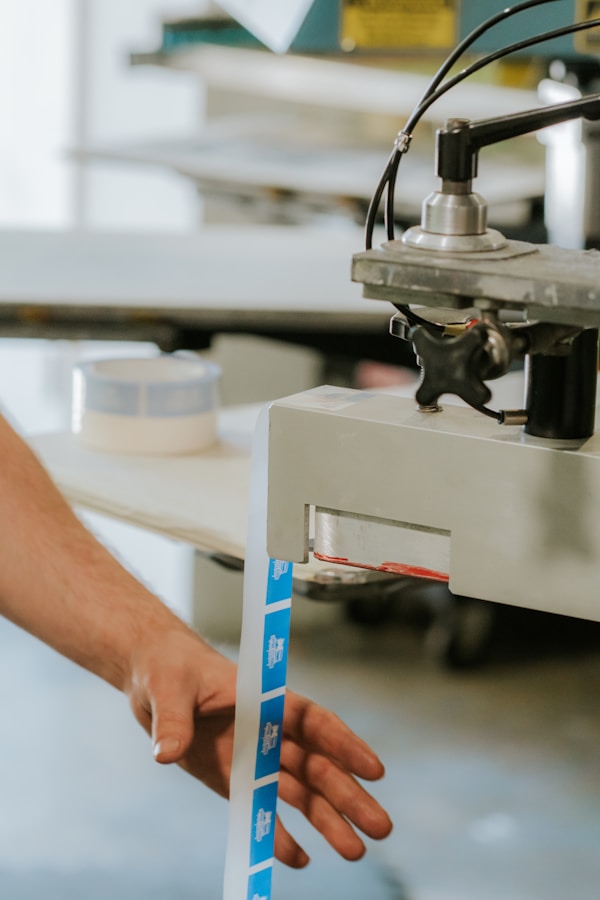
In the complete process chain of label manufacturing, die-cutting is perhaps the operation most easily overlooked by outsiders yet most deeply respected by the engineers who work with it daily. It lacks the visual drama of the printing station and the complex chemical interplay of material selection — yet this deceptively simple act of "making a cut" ultimately determines a label product's dimensional accuracy, edge quality, maximum production speed, and material utilization. In narrow-web rotary label converting, die-cutting precision directly governs the OEE (Overall Equipment Effectiveness) of the entire press line, its importance analogous to the crankshaft in a high-performance engine.
Rotary vs. Flatbed: Two Philosophies
The technical landscape of label die-cutting divides fundamentally into two camps — rotary and flatbed — and the differences between them extend far beyond mere kinematics into two distinct production philosophies. Rotary die-cutting employs a cylindrical die that rotates in synchronization with the printing cylinder, cutting the material in continuous motion. This "non-stop" operation is naturally suited to high-speed narrow-web rotary presses, achieving line speeds of 150–250 meters per minute. Flatbed die-cutting uses a planar die in a vertical reciprocating motion to stamp-cut the material while it is momentarily stationary, making it better suited for thicker substrates or applications requiring extremely high cutting force.
The core advantage of rotary die-cutting lies in speed and consistency. Because the die and material travel at identical line speeds, there is no dynamic impact from acceleration or deceleration during the cutting event, resulting in exceptionally stable edge quality. Modern high-precision rotary die stations achieve repeat positioning accuracy of ±0.03 mm — meaning that within a 300 mm repeat length, each label's die-cut position deviates by less than one-third the diameter of a human hair. This level of precision is critical for multi-layer labels requiring tight registration, such as pharmaceutical labels incorporating holographic security elements.
Flatbed die-cutting retains its irreplaceable role in other scenarios: when the label substrate is a rigid material (such as PVC sheet or heavy cardboard) or when deep through-cutting is required, the vertical stamping force of a flatbed press — reaching tens of tons — exceeds anything the rotary approach can deliver. Furthermore, in short-run personalized label production, flatbed die changeover costs are far lower than rotary alternatives. A flat die plate can be manufactured in hours, while a precision rotary die cylinder may require one to two weeks of lead time.
"Die-cutting is not merely "removing excess material" — it is the precise control of the intersection point between material mechanics, tool geometry, and machine dynamics. A 0.01 mm deviation in blade depth can mean the difference between a 0.3% and a 3% scrap rate.
Magnetic Cylinders and Flexible Die Systems
The introduction of magnetic cylinder technology fundamentally transformed the economics of rotary die-cutting. A traditional solid rotary die is a monolithic steel cylinder with cutting edges machined directly into its surface via CNC engraving or chemical etching. This approach offers exceptional rigidity and die life measured in millions of impressions, but each label shape requires its own dedicated solid die at a manufacturing cost typically ranging from $1,000 to $5,000, with correspondingly massive storage requirements.
The magnetic cylinder system decouples the die-cutting function into two independent components: a permanent magnetic base cylinder mounted on the press, and a thin flexible die. The flexible die is a ring-shaped steel strip just 0.5–1.5 mm thick, with cutting edges precision-formed through chemical etching and a magnetic backing layer that snaps instantly onto the base cylinder surface. Die changeover time drops from the traditional 30–60 minutes for solid dies to under 5 minutes — a revolutionary improvement for the multi-SKU, short-run production model that increasingly dominates the label market.
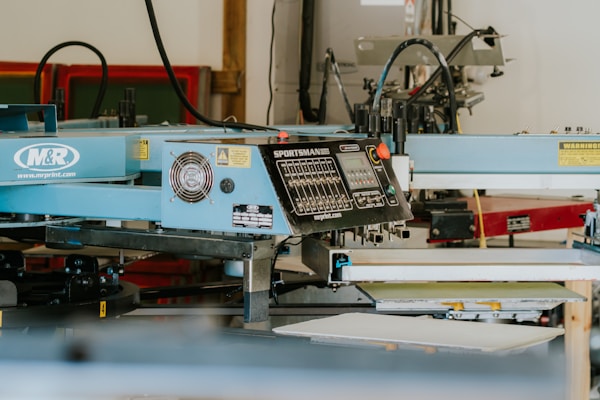
Flexible die blade heights typically range from 0.4–0.8 mm, precisely calibrated to the total thickness of facestock and liner. For standard pressure-sensitive label applications (facestock + adhesive + liner totaling approximately 150–200 μm), the blade must penetrate cleanly through the facestock and adhesive layer while leaving only a slight impression on the liner surface without cutting through — the industry-standard "kiss-cut." Kiss-cut depth control requires accuracy of ±10 μm; any deviation beyond this threshold triggers one of two catastrophic outcomes: insufficient depth prevents clean label dispensing from the liner, while excessive depth causes liner fracture and subsequent jamming in automatic label applicators.
Kiss-Cut vs. Through-Cut: The Art of Depth
Kiss-cutting and through-cutting represent the two fundamental modes of die-cutting, and they frequently must coexist with precision on a single production line. In a typical pressure-sensitive label converting workflow, the label contour is kiss-cut — the blade penetrates the facestock and adhesive, stopping at the silicone release coating on the liner surface — while edge trimming and cross-cutting operations employ through-cutting, where the blade passes through all material layers.
The two cutting modes demand fundamentally different blade geometries. Kiss-cut blades are typically designed with an included angle of 52°–60°; the wider angle provides greater blade strength and service life while reducing the tendency to penetrate the liner. Through-cut blades use a sharper 40°–45° angle, ensuring clean separation of all material layers with minimal cutting force. Achieving both blade angles on a single flexible die requires a multi-step etching process — one of the most technically demanding aspects of flexible die manufacturing.
Die-Cut Depth Control: Critical Parameters
- 01. Kiss-cut standard depth tolerance: ±10 μm (for 50–80 μm facestock)
- 02. Residual liner thickness target: ≥15 μm (ensuring liner integrity under web tension)
- 03. Flexible die blade height uniformity: ≤5 μm deviation across full circumference
- 04. Magnetic cylinder TIR (Total Indicated Runout): ≤3 μm
- 05. Anvil roller surface hardness: HRC 58–62 (steel) or Shore A 85–92 (rubber)
Laser Die-Cutting: Harbinger of the Dieless Era
Laser die-cutting technology is transitioning from laboratory curiosity to production-floor reality, presenting an increasingly tangible challenge to traditional mechanical die-cutting. CO₂ lasers (10.6 μm wavelength) and fiber lasers (1.06 μm wavelength) each serve different material systems: CO₂ lasers achieve peak cutting efficiency on paper and film substrates, where organic materials exhibit very high absorption at mid-infrared wavelengths; fiber lasers excel on metal foils and certain engineering plastics.
The fundamental advantage of laser die-cutting is the elimination of physical tooling — cut profiles are entirely software-defined, and changing label shapes requires nothing more than modifying a digital file. This makes it decisively superior in three scenarios: ultra-short runs (100–500 labels), complex geometries (microstructures impossible to achieve with conventional dies), and variable-data labels (where each label's cut contour differs). However, laser die-cutting line speeds currently lag behind rotary mechanical methods — high-end laser systems achieve approximately 80–120 meters per minute, roughly half the throughput of rotary die-cutting.

Registration Accuracy and Servo Drive Systems
Registration accuracy is the defining performance metric for any die-cutting station. In multi-color printed labels, the die-cut contour must align precisely with the printed image — any visible misregistration results in cosmetic defects. In premium segments such as luxury cosmetics and spirits labels, customer tolerance for registration error is typically below 0.1 mm.
Modern narrow-web rotary presses employ servo drive systems to achieve electronic gear synchronization between stations, replacing traditional mechanical gear trains. The advantage of servo drives lies in their ability to compensate in real time for registration drift caused by material stretch, thermal expansion, and tension fluctuations. Vision registration systems — typically based on high-speed industrial cameras and photoelectric sensors — sample print mark positions at rates of several hundred hertz, feeding deviation signals back to the servo controller for real-time correction. The most advanced closed-loop registration systems have pushed dynamic registration accuracy below ±0.05 mm.
Waste Matrix Stripping: The Underestimated Bottleneck
Waste matrix stripping — the removal of excess facestock and adhesive surrounding the die-cut label contours — is the single most frequent cause of unplanned downtime in the die-cutting process. After kiss-cutting, this skeletal web of waste material must be continuously peeled away and either rewound or shredded for recycling, leaving only the neatly arranged labels on the carrier liner.
Stripping difficulty scales directly with label shape complexity and material properties. For simple rectangular labels, the waste matrix forms a continuous grid structure that strips reliably. But for irregular shapes — circles, ovals, designs with sharp corners or narrow connecting bridges — the waste matrix's structural integrity degrades dramatically, making it prone to fracture at production speeds. Film substrates (PE, BOPP) compound the problem: their elasticity causes stretching during the stripping event, further increasing the risk of web breaks.
Engineers have developed multiple strategies to address stripping challenges: optimizing the peel angle (typically selecting the optimal angle between 30° and 60°), installing vacuum-assisted stripping systems (applying negative pressure beneath the waste matrix to stabilize the peel front), and incorporating "tie bars" — micro-connection bridges designed into the die pattern to reinforce waste matrix continuity. For the most challenging stripping scenarios, advanced production lines deploy waste-detection sensors that automatically reduce speed or halt the press when stripping anomalies are detected, preventing the more catastrophic consequence of waste wrapping around rollers.
Die Wear and Maintenance Economics
Die wear is an inescapable cost factor in the die-cutting process. Solid rotary die blades are typically manufactured from D2 tool steel (HRC 58–62), achieving service lives of 3–5 million linear meters on standard paper facestocks. When cutting substrates containing mineral fillers — such as the calcium carbonate coatings in thermal papers — or abrasive synthetic materials, blade life may decrease to 0.5–1 million meters. Flexible dies, with their thinner blade profiles, typically last 1/5 to 1/3 as long as solid dies, but their manufacturing cost is only 1/10 to 1/5 of the latter, making them frequently more advantageous on a total cost of ownership (TCO) basis.
Early indicators of blade wear include the appearance of micro-burrs on cut edges, deteriorating consistency in kiss-cut depth, and increasing frequency of waste matrix fractures during stripping. Establishing a data-driven die lifecycle management system — tracking cumulative running meters, material types processed, and quality metric trends for each die set — is essential for minimizing unplanned downtime and scrap rates. Leading label converters have begun deploying force sensors and vibration monitoring systems at die-cutting stations, using machine learning algorithms to predict remaining die life and enabling the transition from time-based to condition-based maintenance.
The Future Landscape of Die-Cutting
The evolution of die-cutting technology is advancing along three principal vectors. The first is digitalization: laser die-cutting and digitally controlled die-cutting systems are breaking the traditional paradigm of "one shape, one die," making on-demand production and zero inventory achievable. The second is intelligence: embedded sensors, real-time process monitoring, and AI-driven predictive maintenance are transforming the die-cutting station from a passive execution unit into an actively optimizing smart node. The third is material adaptability: as biodegradable films, ultra-thin facestocks (<30 μm), and linerless label materials gain adoption, die-cutting technology must continuously adapt to entirely new mechanical properties and processing windows.
For label converting operations, the choice of die-cutting technology is no longer a simple equipment procurement decision but a systems engineering challenge requiring the integrated assessment of product mix, order profiles, material combinations, and automation levels. Those enterprises that can flexibly configure between rotary and flatbed, flexible and solid, mechanical and laser will hold a structural advantage in the face of increasingly fragmented market demands. Die-cutting — the quietest station in the label manufacturing chain — is becoming the loudest variable in determining competitive advantage.