Flexible Electronic Labels: When Film Meets Chip
Printed electronics, thin-film sensors, and flexible antennas are transforming labels from passive information carriers into active data-collection nodes. This revolution at the micron scale will redefine every application from pharmaceutical cold chains to precision agriculture.
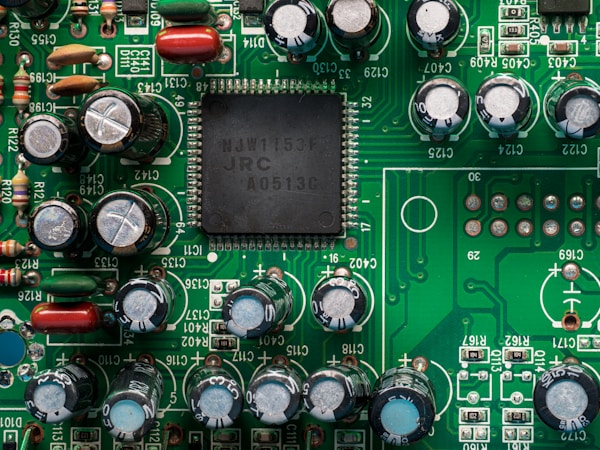
In the semiconductor industry's traditional narrative, chips mean rigid silicon wafers, cleanrooms, and nanometer-scale lithography — a world that has almost nothing in common with label printing. Yet over the past decade, a new technological pathway has been quietly dissolving the barrier between these two industries: flexible electronics. It embeds semiconductor-grade computing and sensing capabilities into substrates that can bend, fold, and even stretch, giving the "label" — a carrier born from the printing press — the ability to perceive its environment, process data, and communicate wirelessly for the first time. When a film less than 100 microns thick can be applied to a product surface like a conventional label yet simultaneously monitor temperature, humidity, and vibration like a miniature computer, the boundaries of the label industry are being fundamentally rewritten.
Flexible electronic labels are not a single product but a systems-level solution fusing multiple technologies: printed electronics, thin-film sensors, flexible antennas, micro-batteries or energy-harvesting modules, and ultra-low-power integrated circuits. The core value proposition is to deliver electronic functionality — previously the exclusive domain of rigid circuit boards — at a cost and through processes (roll-to-roll printing, lamination, die-cutting) that closely mirror traditional label manufacturing.
According to IDTechEx's latest forecast, the global flexible electronics market will grow from $41 billion in 2024 to $74 billion by 2034. Within this, flexible electronic labels — encompassing smart sensor labels, flexible RFID/NFC tags, and printed electronic labels — represent one of the fastest-growing subsegments, with a projected 2024-2030 CAGR of 14.2%. Growth is driven by three converging forces: end-to-end temperature control in pharmaceutical cold chains, real-time food safety monitoring, and the mass deployment of IoT endpoint devices.
Printed Electronics: "Printing" Circuits on a Press
The manufacturing foundation of flexible electronic labels is printed electronics — using adapted printing processes (screen printing, gravure, inkjet, or flexography) to deposit conductive inks, semiconductor inks, and dielectric inks onto flexible substrates (PET film, PEN film, or paper), forming functional circuits. This stands in stark contrast to conventional PCB (printed circuit board) subtractive manufacturing, which etches copper foil to form traces, typically utilizing only 30%-40% of the material. Printed electronics' additive approach theoretically achieves near-100% material utilization.
Conductive inks are the critical consumable. Three dominant ink systems define the current market: silver nanoparticle inks (highest conductivity, highest cost at roughly $800-1,500/kg), silver nanowire inks (enabling transparent conductors for display and touch applications), and carbon-based inks (lowest cost at $50-100/kg, but two orders of magnitude lower conductivity than silver — suitable for antennas and sensors where moderate precision suffices). In recent years, copper nanoparticle inks have attracted intense interest as a low-cost silver substitute — copper's conductivity trails silver by only 6%, at one-tenth the cost — but copper's far inferior oxidation resistance demands specialized protective strategies in ink formulation and sintering.
The Flexible Electronic Label Technology Stack
- 01. Substrate layer: PET film (most common, 25-75μm thick), PEN film (high-temperature tolerant for soldering processes), or paper substrates (lowest cost, limited environmental durability).
- 02. Conductive layer: Printed or vapor-deposited conductive traces forming antennas, interconnects, and electrodes. Silver nanoparticle inks for precision circuits; carbon inks for antennas and sensors.
- 03. Sensing layer: Functional inks or thin-film materials sensitive to temperature, humidity, gas, or light, converting environmental variables into electrical signals.
- 04. Chip layer: Ultra-thin silicon chips (<50μm) or organic thin-film transistors (OTFTs) providing data processing, storage, and communication protocol stacks.
- 05. Energy layer: Printed thin-film batteries, RF energy harvesting (drawing power from NFC/RFID readers), or thermoelectric/photovoltaic thin films powering the label.
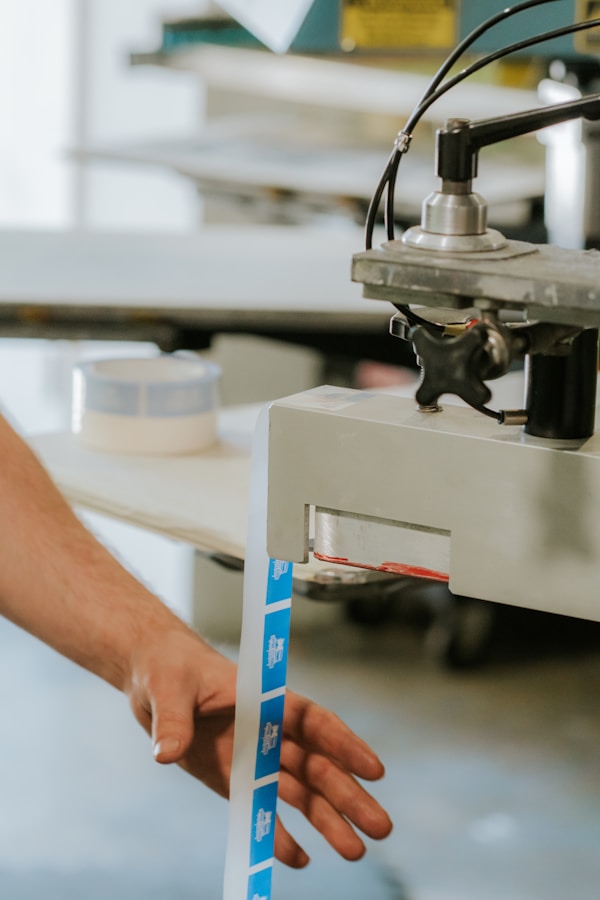
On the process side, roll-to-roll (R2R) continuous printing is the key to low-cost, high-volume flexible electronic label production. R2R sequentially prints multiple functional layers (conductive, sensing, dielectric) onto a continuously moving film web, followed by downstream chip pick-and-place attachment, lamination encapsulation, and die-cutting — a production cadence highly analogous to conventional label printing. Germany's ISRA VISION and Finland's Valmet have launched inline inspection systems optimized for printed electronics quality, capable of real-time open-circuit, short-circuit, and resistance-uniformity detection at R2R line speeds.
Temperature Monitoring Labels: The Cold Chain's "Last Pair of Eyes"
The most commercially mature application of flexible electronic labels today is temperature monitoring in pharmaceutical and food cold chains. The global cold-chain logistics market was valued at approximately $340 billion in 2024, with product losses from temperature excursions estimated at $35 billion annually — roughly 10% of total market value. For high-value biologics (such as mRNA vaccines requiring -70°C ultra-cold storage) and fresh ingredients, even hours of temperature deviation during transit can render products unsalvageable.
Traditional cold-chain temperature monitoring relies on data loggers — standalone electronic devices typically priced at $30-100 each, requiring manual retrieval after shipment, computer connection for data download, recalibration, and redeployment. This workflow is tolerable for high-value, low-volume pharmaceutical logistics but completely infeasible for food cold chains handling millions of packages daily.
Flexible electronic temperature-monitoring labels are filling this gap. Chemical time-temperature indicator (TTI) labels developed by Israeli startup Cryolog and Switzerland's Freshpoint use irreversible color-change reactions triggered by specific cumulative temperature-time thresholds, costing as little as $0.05-0.20 per unit. More advanced electronic temperature-monitoring labels — such as those from Thin Film Electronics (Thinfilm) and PragmatIC Semiconductor — integrate a temperature sensor, data-logging chip, and NFC antenna into a single flexible label less than 200μm thick, recording temperature at 15-minute intervals for up to 90 days. A smartphone NFC tap instantly retrieves the complete temperature curve. Per-unit costs have fallen to the $1.50-3.00 range, making item-level temperature monitoring commercially viable for high-value foods (salmon, wagyu beef) and biological pharmaceuticals.
"The ultimate vision of flexible electronic labels is this: every product carries its own 'digital sensory system' — it can see temperature, smell gases, remember its experiences, and the moment you touch it, lay out the complete data narrative of its entire life journey before you.
Ultra-Thin Chips: From Silicon Wafer to Film Label
The most critical "hard-tech" component in flexible electronic labels is the manufacture and packaging of ultra-thin silicon chips. Conventional RFID/NFC chips are 150-200μm thick — mounted on a label, they create a perceptible "bump" that compromises flexibility and conformability. Flexible electronic labels require chip thicknesses below 50μm — some applications (such as smart textile labels) demand sub-30μm — to achieve true conformal bonding with film substrates, preventing fracture at the chip-film interface during bending and folding.
NXP Semiconductors, Infineon, and STMicroelectronics are the three leading suppliers of ultra-thin label chips. NXP's UCODE DNA Track — a RAIN RFID chip designed for supply-chain traceability — achieves a 55μm package thickness and can be pick-and-placed directly onto flexible label substrates in a roll-to-roll process. Infineon's SLC37 series security chips (used in passports and identity documents) reach 75μm through wafer back-grinding, with ongoing development pushing toward sub-50μm targets.
Yet however thin they become, silicon chips remain inherently rigid — silicon is brittle and fractures below minimum bend radii. This is driving a more radical technological direction: organic thin-film transistors (OTFTs). OTFTs use organic semiconductor materials (such as pentacene derivatives and polythiophenes) instead of silicon, deposited by printing processes directly onto flexible substrates to form circuits that can genuinely bend and even stretch. UK-based PragmatIC Semiconductor pioneered this space — its FlexIC series of flexible integrated circuits uses metal-oxide thin-film transistor (IGZO TFT) technology, fabricated on 200mm wafers at thicknesses of just a few microns, processable via roll-to-roll converting and die-cutting like conventional labels.
Flexible Electronic Labels: Key Market Data
Energy Autonomy: How Do Batteryless Labels Work?
Electronic labels need energy to drive sensors, process data, and transmit signals. The conventional solution — embedded coin-cell batteries — conflicts directly with flexible electronic labels' core requirements of ultra-thin form factors, low cost, and mass deployability due to battery thickness (typically >1mm), weight, and end-of-life disposal challenges. Energy autonomy — operating without external batteries — is therefore a central proposition in flexible electronic label architecture.
The most mature batteryless approach is radio-frequency (RF) energy harvesting. Passive RFID/NFC tags draw operating power from the electromagnetic field emitted by a reader, requiring no onboard power source — a principle deployed in conventional RFID tags for decades. The challenge for flexible electronic labels is that sensor data acquisition and storage demand orders of magnitude more energy than simple ID read-outs. Companies like PragmatIC and Wiliot are developing "energy-aware" ultra-low-power chip architectures — chips remain in deep sleep most of the time, waking only when an RF field activates them, rapidly completing one sensor reading and data transmission, then immediately returning to sleep. Wiliot's IoT Pixel tag exemplifies this approach: a postage-stamp-sized flexible label that harvests ambient energy from Bluetooth Low Energy (BLE) signals, continuously sensing temperature and reporting data to the cloud with no battery whatsoever.
A parallel path is printed thin-film batteries. Zinc-based printed batteries developed by Enfucell (Finland) and Blue Spark Technology (US) measure just 0.4-0.6mm thick and can be roll-to-roll laminated with label substrates in a single process. Typical capacities of 10-40mAh are sufficient to power a temperature sensor logging every 15 minutes for 30-90 days. While per-unit costs ($0.50-2.00) and energy density cannot yet match coin cells, their thickness and flexibility advantages make them the optimal energy match for "finite-life" sensor labels such as cold-chain shipment monitors.
More frontier energy-harvesting approaches include thermoelectric thin films (generating power from the temperature differential between a human body or environment and the product) and flexible photovoltaic films (harvesting light energy from indoor lighting). These remain at the laboratory or small-scale pilot stage, but they represent the long-term trajectory toward "perpetual energy" for flexible electronic labels — labels that require zero disposable energy components throughout their entire lifecycle from manufacture to end-of-life.
Frontier Applications: From Pharmaceuticals to Fields
Beyond cold-chain temperature monitoring, flexible electronic labels are demonstrating transformative potential across a range of emerging applications.
Pharmaceutical Anti-Counterfeiting and Compliance. The global counterfeit-drug market is estimated at $75 billion annually, causing enormous economic losses and directly threatening patient lives. Flexible NFC labels integrated into pharmaceutical packaging provide the physical last line of defense for item-level anti-counterfeit traceability. The EU Falsified Medicines Directive (FMD) and the US Drug Supply Chain Security Act (DSCSA) mandate complete supply-chain serialization from 2024 onward — NFC/RFID tags, with their anti-clone and tamper-evident properties, are emerging as a critical complement to QR codes.
Precision Agriculture. Flexible electronic labels are transitioning from concept to deployment in smart farming. Soil moisture and nutrient sensor labels can be distributed across agricultural fields at scale, transmitting soil data wirelessly in real time to farm management systems for precision irrigation and fertilization. Compared to conventional rigid soil sensors ($50-200 per unit), printed electronic sensor labels target the $1-5 per unit range, making "one sensor point per square meter" density economically feasible for the first time.
Smart Textiles and Wearables. Another high-growth vector is integration with textiles. Washable-grade flexible NFC/RFID tags sewn or laminated into garments enable lifecycle management (from manufacturing through retail, secondhand resale, and recycling), carry brand interaction content (styling suggestions, fabric care guides), and store Digital Product Passport (DPP) data. Brand giants including LVMH, Inditex (Zara's parent), and Nike initiated large-scale flexible RFID label deployments across their product lines in 2024-2025.
"We are standing at an inflection point: the per-unit cost of a flexible electronic label is about to break through the one-dollar barrier. Once it crosses that threshold, it will no longer be a 'premium option' — it will become the standard configuration for every product, just as the barcode did forty years ago.
Challenges and Pathways: Three Bottlenecks to Scale
Between the laboratory and mass commercialization, flexible electronic labels face three critical bottlenecks. First, the cost curve. Despite steady declines in printed-electronics unit costs, flexible electronic labels with integrated sensing ($1.50-5.00 per unit) remain one to two orders of magnitude more expensive than conventional RFID tags ($0.03-0.08 at volume). Closing this gap requires scaled expansion of printed-electronics capacity and sustained yield improvements.
Second, reliability validation. Flexible electronic labels must maintain long-term electrical stability under bending, vibration, temperature cycling, and moisture ingress. No unified reliability test standards exist for flexible electronic devices — IEC and ISO are drafting relevant standards, but formal publication and industry adoption remain 2-3 years out. Until then, reliability validation for each application requires extensive field testing jointly conducted by brands and label suppliers.
Third, recycling and environmental impact. The conductive inks (containing silver or carbon), thin-film batteries (containing zinc and manganese), and semiconductor chips (containing silicon or organic semiconductors) in flexible electronic labels present unclear end-of-life environmental impacts and recycling pathways. As the label industry invests heavily in sustainability, will the mass deployment of labels containing trace metals and chemicals create new environmental problems? This tension requires collaborative resolution among label suppliers, waste-management firms, and environmental agencies.
Flexible Electronic Label Technology Roadmap 2025-2035
- 2025 Pharmaceutical cold-chain temperature-monitoring labels exceed 30% penetration among the top 10 global pharma companies. Batteryless sensor labels like Wiliot's IoT Pixel achieve ten-million-unit shipments.
- 2027 Flexible electronic labels with integrated sensing break the $1.00 per-unit cost barrier. Flexible RFID label penetration in global apparel retail exceeds 25%.
- 2029 Organic thin-film transistors (OTFTs) reach commercial-scale production; fully flexible, fully printed electronic labels enter the market.
- 2032 Annual flexible electronic label shipments surpass 10 billion units. Smart agriculture sensor labels achieve million-hectare deployments across major farming nations.
- 2035 Flexible electronic labels become the "default configuration" for consumer goods; labels evolve fully from information carriers to data-collection and interaction nodes.
What flexible electronic labels represent is a triple paradigm shift for the label industry: from "printing" to "manufacturing," from "materials" to "systems," and from "passive" to "active." When a single film can carry a brand's visual language, sense a product's physical state, record a supply chain's data trail, and deliver a complete digital narrative the instant a consumer touches it — the very definition of the word "label" has been permanently rewritten.
When film meets chip, it is not the simple lamination of two materials but the deep convergence of two industrial civilizations. The economics of the printing press and the intelligence of the semiconductor. Roll-to-roll scalability and precision electronic functionality. These seemingly opposing attributes are achieving unprecedented unification in the flexible electronic label. For label-industry practitioners, this is both a technical challenge demanding comprehensive knowledge renewal and a strategic gateway to a trillion-dollar market. Over the next decade, labels will no longer merely be "stuck on" products — they will become inseparable digital organs of the products themselves.