
On the hypercompetitive visual battlefield of the supermarket shelf, a brand has fewer than three seconds to capture a consumer's attention. Shrink sleeve labels are the weapon purpose-built for this battleground. Unlike conventional pressure-sensitive or wet-glue labels, a shrink sleeve is a pre-printed film tube that contracts tightly around the container surface under the application of hot air or steam, achieving seamless coverage from cap to base. According to AWA (Alexander Watson Associates), the global shrink sleeve market reached approximately $14.8 billion in 2024, sustaining a compound annual growth rate (CAGR) of 5.2% — the fastest-growing sub-category in the entire label industry. The growth engine is not merely brands' desire for "more canvas"; it is the combined force of complex container design, anti-counterfeiting requirements, and global beverage consumption expansion.
The core technical value of shrink sleeves lies in solving a fundamental problem that conventional labels cannot: the constraint of container geometry. Pressure-sensitive labels require flat or single-curve application zones; when faced with tapered, contoured, or multi-curve container shapes, they wrinkle or fail to conform. A shrink sleeve, like a "heat-shrink garment," uniformly wraps virtually any container shape — square, oval, gourd-shaped, or even human-silhouette bottles. This liberates industrial designers and brand managers to use the container shape itself as a differentiation tool, unconstrained by the need for "a flat labeling zone."
Material Science: The Four-Film Trade-Off Matrix
The performance profile of a shrink sleeve — shrink ratio, clarity, stiffness, printability, and recyclability — is fundamentally determined by the base film selection. Four film materials currently compete for market share, forming a complex trade-off matrix.
Shrink Sleeve Film Substrates Compared
- 01. PET-G (Amorphous PET): Commanding ~45% market share, PET-G is the dominant substrate. Shrink ratios reach 70-78% (in the transverse direction), with high clarity, excellent printability, and moderate cost. Its critical advantage is density (1.27 g/cm³), which sinks in float-sink separation — theoretically preventing PET-G sleeves from contaminating PET bottle recycling streams.
- 02. OPS (Oriented Polystyrene): Holding ~25% market share. OPS film is prized for exceptional clarity and natural "shrink memory" (minimal post-shrink distortion or orange-peel texture), making it ideal for transparent-bottle applications such as clear juice or mineral water. Density at ~1.03 g/cm³ sometimes hovers at the critical float-sink threshold, causing sorting instability.
- 03. PVC (Polyvinyl Chloride): Once the market leader, now declined to ~20% share. PVC offers the lowest shrink initiation temperature and the widest shrink temperature window, giving it the highest process tolerance on application equipment. However, PVC releases hydrogen chloride (HCl) during incineration, and its density (1.30-1.45 g/cm³) is too close to PET's for float-sink differentiation — making it the "number one enemy" of PET recycling. The EU PPWR regulation has explicitly targeted PVC packaging for phase-out before 2030.
- 04. PLA (Polylactic Acid): Below 3% market share but growing fastest. As a bio-based compostable material, PLA shrink sleeves have natural positioning in the "compostable packaging" category. Shrink ratios reach 60-65% with clarity approaching PET-G. The fundamental limitation is the scarcity of industrial composting infrastructure — most municipal recycling systems cannot distinguish PLA from PET, and PLA contamination degrades recycled PET quality.
The material selection calculus is increasingly dictated by recycling regulations. APR (the Association of Plastic Recyclers) in its Critical Guidance Protocol explicitly recommends that shrink sleeves for PET bottles should use materials with density below 1.0 g/cm³ (automatically ejected via float-sink separation) or PET-compatible PET-G substrates. This guidance is profoundly shaping global brand decisions — Coca-Cola, PepsiCo, and Nestlé have committed to converting all PET bottle sleeves to PET-G or polyolefin-based materials by 2025.
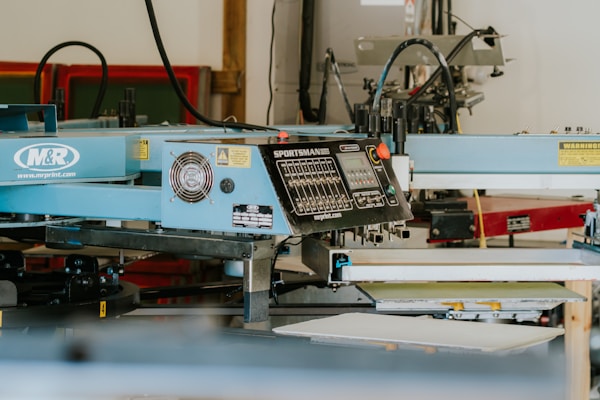
Printing Technology: The Gravure vs. Digital Century
Shrink sleeve printing is a domain of intense technical tension. Because the film undergoes non-uniform deformation during shrinking — higher shrink ratios where the bottle curves most, lower ratios on flat areas — all graphics must undergo precise distortion compensation calculations at the pre-press stage, ensuring the final post-shrink image presents correct proportions and alignment. This makes shrink sleeve pre-press design significantly more complex than conventional labels.
Gravure Printing is the traditional king of shrink sleeve printing, still commanding approximately 55% market share. Gravure's core advantages are threefold: first, unparalleled consistency on ultra-long runs — a single gravure cylinder can run millions of meters with minimal color drift; second, superior color density and saturation — gravure ink film thickness reaches 3-5μm, far exceeding flexo's 1-2μm; third, excellent film substrate adaptability — gravure press tension control systems precisely manage the stretch behavior of shrink films at high speed. However, gravure's fatal weakness is cylinder cost: a set of 8-color gravure cylinders typically runs $8,000-$15,000 with a 2-4 week lead time. This confines gravure to runs above 100,000 linear meters — below this threshold, amortized cylinder costs become prohibitive.
Flexographic Printing occupies approximately 30% of the mid-volume market. Recent advances in HD Flexo technology — particularly flat-top dot structures and laser-ablated masks (LAMS) — have narrowed the image quality gap with gravure, while plate costs remain just 1/3 to 1/2 of gravure's. For mid-range runs of 50,000 to 500,000 meters, flexo is increasingly the optimal cost-performance choice.
Digital Printing is migrating from the margins to the mainstream. The HP Indigo 200K — launched in 2024 as the flagship shrink sleeve digital press — supports up to 650mm web width and 80 meters per minute line speed, making digital competitive with flexo in mid-volume for the first time. Digital's revolutionary significance for shrink sleeves extends beyond plate elimination to variable data and personalization: every single sleeve on a roll can be different — different promotional messages, different regional languages, different limited-edition artwork — delivering enormous commercial value in FMCG regional marketing and limited-edition strategies.
"The future of shrink sleeves is not a gravure-or-digital binary. It is a hybrid printing question — running base colors and large solids on gravure, then overlaying variable data and personalization via a digital unit on the same production line. Whoever solves this hybrid workflow integration first wins the next decade.
Application Engineering: The Precision of the Steam Tunnel
Shrink sleeve application is a precision thermodynamic engineering process. A pre-printed flat-lay film tube is first cut into individual sleeves matching the container height, then mechanically or pneumatically placed over the container, and finally passed through a shrink tunnel (hot air or steam) to conform the film tightly to the surface. Line speeds reach 800-1,200 containers per minute.
Steam tunnels dominate with approximately 70% market share. Compared to hot-air tunnels, steam's advantage lies in heat transfer uniformity — steam's latent heat release mechanism ensures virtually every point of the film reaches shrink temperature simultaneously, preventing the "early-shrink-pulls-late-shrink" phenomenon that causes wrinkles and graphic distortion. Allen Coding and Axon (a ProMach brand) are the two leading steam tunnel equipment manufacturers, with their latest-generation systems covering the full size range from 0.5L water bottles to 5L cooking oil containers, and achieving multi-zone temperature control precise to ±1°C.
Application accuracy is the critical quality parameter. Sleeve positioning tolerance is typically held to ±1.5mm, while applications requiring precise alignment with container features (handles, embossed lines, or fill marks) demand ±0.5mm. To achieve this precision, modern application machines universally incorporate vision inspection systems — high-speed cameras detect sleeve position in real time and feed offset corrections into a closed-loop control system.

The Recycling Challenge: Physical Limits of Float-Sink
The single greatest industry challenge facing shrink sleeves is not technical — it is environmental. When a PET bottle wrapped in a shrink sleeve enters a recycling sorting line, the problem emerges: the near-infrared (NIR) sorter "sees" the sleeve film's material signature, not the bottle body's. If the sleeve covers more than approximately 60% of the bottle surface, the NIR sorter may misclassify the PET bottle as "non-PET" or route it into the wrong material stream.
Even if the PET bottle successfully enters the PET recycling stream, the sleeve creates further challenges in the grinding and washing stages. A core step in PET bottle recycling is float-sink separation — PET flakes (density ~1.38 g/cm³) sink in water, while contaminants with density below 1.0 g/cm³ (such as PP caps, PE sleeve fragments) float, enabling separation. However, PVC and PET-G sleeves have densities of approximately 1.35 and 1.27 g/cm³ respectively — both sink — meaning they contaminate the PET flake stream and degrade quality in subsequent melt-recycling.
Shrink Sleeve Recycling Compatibility Ratings
The industry is pursuing solutions from multiple directions. The first path is density engineering — developing novel shrink films with density below 1.0 g/cm³ that automatically float out during separation. Japan's Gunze and Korea's SKC have introduced modified PET-G films at 0.95-0.98 g/cm³, though losses in shrink ratio and clarity remain unresolved technical bottlenecks.
The second path is wash-off sleeves. Unlike conventional shrink sleeves that bond tightly to the container surface, wash-off sleeves use specialized adhesive formulations that release completely in alkaline wash tanks, preventing film fragments from contaminating PET flake. Avery Dennison's CleanFlake™ technology has been adapted for some shrink sleeve applications, though with a cost premium of approximately 15-20%.
The third and most radical path is eliminating the sleeve entirely. Coca-Cola's "Label-less Bottle" launched in the Japanese market uses laser etching to print brand identification directly on the PET bottle surface, completely removing the label from the recycling equation. While currently limited to specific channels like vending machines (consumers still need labels for shelf identification), it points toward a thought-provoking future: under the ultimate logic of the circular economy, the best label may be no label at all.
"What the shrink sleeve industry faces is not a materials problem — it is a systems design problem. We need not only better films, but end-to-end collaborative optimization spanning label design, container design, and recycling infrastructure.
Brand Design Advantage: 360° Visual Supremacy
If recycling compatibility is the Achilles' heel of shrink sleeves, then design freedom is their undisputed core value proposition. No other label format offers such a complete visual narrative space — 360-degree seamless coverage from cap to base, continuous image gradients on curved surfaces — for brand managers and packaging designers, it is the canvas of dreams.
In the FMCG industry, shrink sleeves have catalyzed a series of innovative brand strategies. Seasonal and limited-edition packaging is the most prominent application — enabled by digital printing's plateless nature, brands can launch Christmas, New Year, collaboration, and other limited-edition packaging on extremely short timelines, each SKU requiring only thousands to tens of thousands of sleeves. Starbucks' seasonal shrink sleeve strategy for its bottled coffee line gives the same product an entirely different visual identity each season; per its financial disclosures, limited-edition packaging products sell out 2.3x faster than standard editions.
Tamper evidence and cap sealing is another major advantage. A full-wrap sleeve can simultaneously cover the junction between cap and bottle body, creating physical "tamper-evident proof" — any attempt to open the cap breaks the sleeve along pre-scored perforation lines, allowing consumers to visually verify whether the product has been compromised. This property has driven widespread adoption of shrink sleeves in pharmaceuticals, infant food, and premium beverages.
Market Landscape & Future Outlook
2024-2030 Shrink Sleeve Market Projections
- 01. Global Market Size: Growing from $14.8 billion in 2024 to $20.5 billion by 2030, at 5.2% CAGR. Asia-Pacific will contribute over 45% of incremental volume, with China and India as the core growth engines.
- 02. PVC Phase-Out Trajectory: PVC's global shrink sleeve share is projected to decline from 20% in 2024 to below 5% by 2030. EU and California regulations are the most aggressive drivers.
- 03. Digital Print Penetration: Rising from the current 3% to 12-15% by 2030. Market deployment of the HP Indigo 200K and Bobst Master DM5 will be the key inflection points.
- 04. Recyclability Certification: By 2028, major brand owners are expected to require 100% of shrink sleeves to carry APR or RecyClass recyclability compatibility certification.
- 05. Hybrid Print Workflows: Gravure-plus-digital hybrid lines will move from proof-of-concept to industrial deployment during 2026-2028, particularly in beverages and home/personal care.
The competitive landscape is accelerating toward consolidation. The top five global shrink sleeve suppliers — CCL Industries, Fuji Seal International, Berry Global (Clingfilm division), Klöckner Pentaplast, and Bonset America — collectively hold approximately 55% global market share. These incumbents are consolidating through acquisitions, capacity expansion, and technology partnerships. Simultaneously, a wave of innovative companies focused on sustainable materials and digital printing is emerging, including the Netherlands' Sleever International and Japan's Fuji Tokushu Shigyo.
Shrink sleeves stand at a crossroads defined by tension. On one side, brands' demand for 360-degree visual expression and complex-container adaptability continues to grow robustly, propelling this category forward. On the other, tightening recycling regulations and circular economy targets pose fundamental challenges to shrink sleeve materials and design. The winners of the next decade will not be those who merely pursue ever more dazzling visual effects, but those who find creative equilibrium between the pinnacle of brand expression and the floor of environmental compliance — using lower-density materials, reduced ink coverage, smarter sorting technology, and more efficient recycling workflows to ensure that the 360-degree brand revolution and the circular economy vision advance hand in hand.