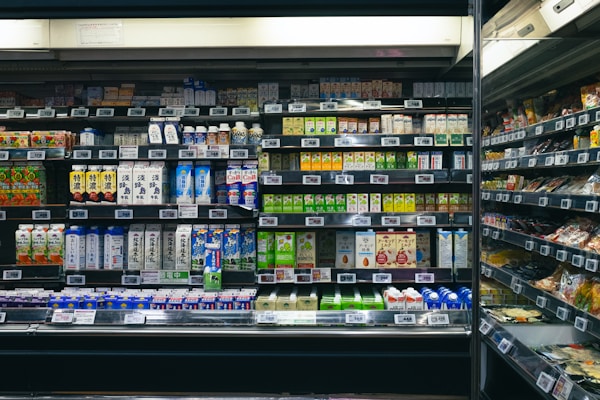
In a global wine and spirits market worth over $380 billion annually, the label plays a uniquely paradoxical role: it is simultaneously a legal document — required to convey alcohol content, origin, allergens, and other mandatory information with precision — and a work of art, tasked with communicating a brand's heritage, terroir, and emotion within an area smaller than a postcard. The tactile feel of a Burgundy Grand Cru label, the luster of its gold foil, the depth of its embossing — these directly influence the $50 to $500 premium a consumer is willing to pay. This is not hyperbole: Wine Intelligence research shows that label design influences purchase decisions by 68% in the above-$15 wine segment.
Wine and spirits labeling is also one of the most technically demanding niches in commercial printing. It requires the stacking of multiple premium finishing processes within a tiny area — hot foil stamping, cold foil, embossing, debossing, screen printing, spot UV coating, metallic inks — all of which must survive cellar conditions of low temperature and high humidity, hours of submersion in an ice bucket, and the friction and impact of logistics transport. A great wine label is both a pinnacle of visual design and a comprehensive examination of materials engineering and print craft.
Paper & Substrates: The "First Touch" of a Wine Label
In the world of wine labels, paper is not merely a printing substrate — it is the starting point of brand narrative. The moment a consumer picks up a bottle and their fingers contact the label surface, the story begins: a rough cotton-textured stock whispers of Old World tradition and restraint; a smooth coated board conveys New World modernity and vibrancy; a lightly grained recycled paper speaks of sustainability values.
The mainstream substrates in today's wine label market fall into three broad categories:
Wine Label Substrate Classification
- 01. Wet-Strength Specialty Papers: Exemplified by Favini's Crush series and Ahlstrom's Compliant range. These papers undergo specialized wet-strength treatment, maintaining structural integrity and print image clarity after 4-6 hours of ice bucket immersion. Basis weights typically range from 80-120 g/m², with cotton or hemp fiber content for distinctive hand-feel.
- 02. Coated / Metallized Papers: Represented by UPM Raflatac's Wine Label series and Lecta's Adestor range. Coated surfaces support high-precision multi-color printing and UV varnishing, while metallized papers (silver or gold base achieved through vacuum aluminum deposition) deliver the luxury visual effect sought by spirits brands.
- 03. Synthetic Film Substrates: Including Avery Dennison's Fasson PE/PP film range. Fully water-proof and tear-resistant, these are commonly specified for ice wines, sparkling wines, and certain spirits that face extreme conditions. The trade-off is the absence of paper's tactile warmth and "breathability," limiting adoption in premium wine segments.
A notable recent trend is the resurgence of "artisanal paper" in wine labels. Italy's Fedrigoni Group — one of the world's largest specialty paper manufacturers — launched its Materica Wine series in 2024, specifically engineered for wine labels. Using 30% post-consumer recycled fiber (PCR) and natural mineral fillers, it presents a raw, uncoated texture while maintaining adequate wet-strength through proprietary internal sizing. The series was rapidly adopted by boutique wineries across Napa Valley and Tuscany — perfectly aligning with today's premium consumers' dual demand for "authenticity" and "sustainability."
Print Finishing: Stacking Perfection in Miniature
Wine label printing is the most process-intensive niche in the entire label industry. A premium Bordeaux label may require 8-12 independent printing and finishing passes, each demanding precise registration and rigorous quality control.
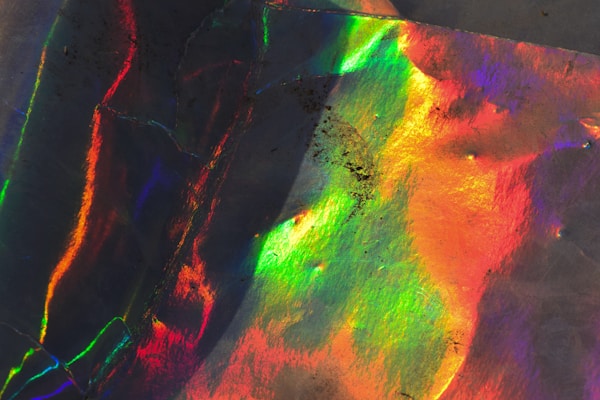
Hot Foil Stamping is the most iconic wine label process. A heated metal die transfers metallic foil (gold, silver, copper, holographic, and more) onto the paper surface, creating mirror-finish graphics or text. On premium labels, foiling often employs more than one color — dual or even triple foil stamping (e.g., gold main motif + silver fine line + copper vintage numerals) requires multiple registration passes, each held to ±0.1mm tolerance. Kurz and API Group are the two global leaders in foil materials, with Kurz's LUXOR® series offering over 200 standard colors and special-effect options.
Embossing & Debossing uses engraved metal dies to press three-dimensional relief into the paper surface, adding a tactile dimension. Across the five Premier Cru estates of Bordeaux, embossing is practically standard — the family crest on Château Lafite, the annually changing artist frame on Mouton Rothschild — all achieve visible three-dimensional depth through multi-level embossing. Fineness depends on die manufacturing: chemical-etched dies suit large-area shallow embossing, while CNC-engraved brass dies deliver fine multi-level relief at depths exceeding 0.5mm.
"A great wine tells the story of where it comes from; its label tells the story of the winemaker's taste. In the age of digital everything, tactile experience has become more precious than ever — you cannot feel the warmth of handmade paper or the depth of embossing through a screen.
Screen Printing occupies a distinctive position in wine labeling. Unlike offset's thin ink film, screen printing can deposit ink layers 30-50μm thick, creating an almost painterly texture and high-saturation color. Many premium Australian and South African estates use screen printing to achieve raised varnish effects — letting specific motifs or text "rise" from the label surface so consumers can feel the relief with their fingertips. Screen printing's high ink-film properties also make it the ideal application method for metallic and fluorescent inks, which require sufficient film thickness to exhibit their optical effects.
The Rise of Digital Printing is reshaping the wine label landscape. The HP Indigo 6K series and Durst Tau RSCi are the two dominant digital platforms for wine labels today. Digital printing eliminates platemaking, making short-run personalized labels — private-label wines, limited-edition serial-numbered labels, variable-data security labels — economically viable. Italy's Estal Group (one of Europe's largest wine packaging suppliers) reports that its digital print orders grew 47% between 2023 and 2024, with over 80% of the increase coming from runs of 1,000-5,000 labels.
The Global Regulatory Labyrinth: TTB, EU & Asia-Pacific
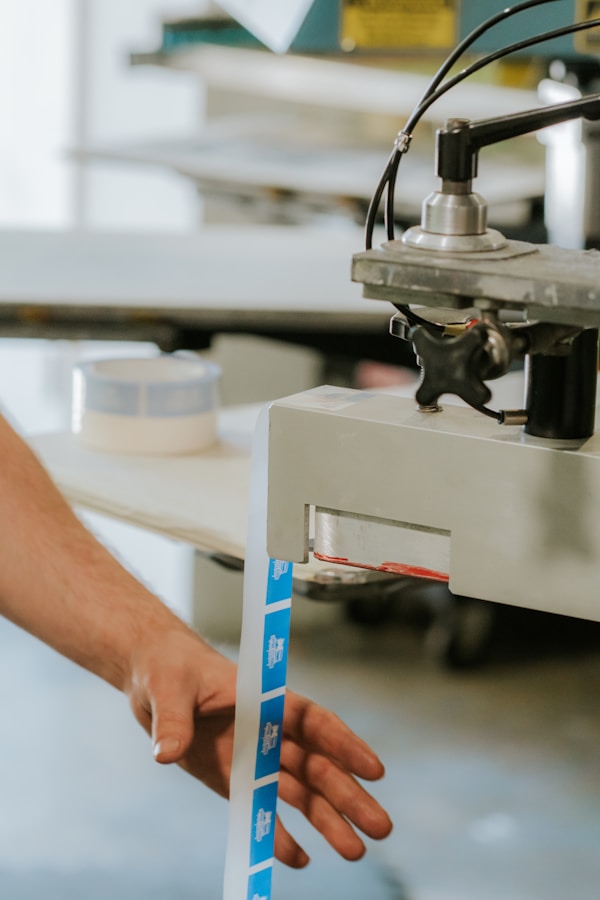
If printing technology tests the label converter's technical capabilities, then regulatory compliance tests the entire supply chain's depth of knowledge and speed of response. Alcoholic beverages are among the most heavily regulated consumer goods globally, and the label — as the primary channel through which consumers receive product information — is naturally the focus of regulators.
The U.S. TTB (Alcohol and Tobacco Tax and Trade Bureau) imposes extraordinarily detailed requirements on beverage alcohol labels. Every product sold in the U.S. market must receive pre-approval through TTB's Certificate of Label Approval (COLA) process, covering dozens of elements including brand name, alcohol content formatting, appellation of origin declarations, Government Warning statement sizing and placement, sulfite declarations, and more. TTB's 2023 update to its Beverage Alcohol Manual added strict definitions for "natural wine," "organic," and "sustainable" claims — any use of these terms on labels must be supported by USDA- or TTB-recognized third-party certification.
Global Wine Label Regulatory Comparison
The European Union is undergoing a historic transformation in wine labeling regulation. The amendment to EU 2019/33, effective December 8, 2023, requires all wines sold in the EU to declare a full list of ingredients and a nutrition information statement on the label — a global first for the wine industry. Given the limited real estate on wine labels, the EU permits linking to an electronic label (e-label) via QR code, though the physical label must display at least the energy value (in kJ/kcal). This regulation has spawned an entirely new "e-label" service market — U-Label (developed by European wine and spirits industry associations) registered over 150,000 product e-labels within its first year of operation.
Asia-Pacific presents a highly fragmented regulatory landscape. China's GB 15037 (National Standard for Wines) and GB 2758 (Hygiene Standard for Fermented and Formulated Alcoholic Beverages) impose strict Chinese-language labeling requirements — all imported wines must carry a compliant Chinese back label whose information must align with the original label. Japan's Liquor Tax Act has a unique "geographical indication" system recognizing only specific regions — such as Koshu and Hokkaido — for appellation use. Australia's Wine Australia administers the Label Integrity Program (LIP), using full-chain traceability to verify the accuracy of vintage, variety, and origin claims on labels.
Anti-Counterfeiting & Traceability: The Invisible Front Line
Wine and spirits — particularly fine wines and aged spirits — are among the most counterfeited consumer products on earth. Wine-Searcher estimates that counterfeit wines in global circulation are worth $3 billion, representing roughly 20% of the premium wine market. In China alone, customs data suggests over 2 million bottles of counterfeit imported wine were seized in 2023. The label, as the product's first line of identity defense, is naturally the primary carrier for anti-counterfeiting technology.
Current anti-counterfeiting systems for premium wine labels typically employ a multi-tiered architecture: the first tier consists of consumer-visible "overt features" — holographic labels, optically variable ink (OVI), micro-text; the second tier comprises tool-dependent "covert features" — UV fluorescent fibers, infrared inks, digital watermarks; and the third tier includes forensic-grade "evidentiary features" — chemical markers, isotope tagging — deployed only in dispute arbitration.
NFC technology is opening new frontiers in wine authentication. Diageo's NFC deployment on Johnnie Walker Blue Label has become the industry benchmark: each NFC chip embedded in the bottle cap generates a unique dynamic URL, enabling consumers to verify product authenticity and cap integrity (whether it has been opened) with a simple phone tap. In 2024, Burgundy's Domaine de la Romanée-Conti announced the deployment of Selinko's NFC authentication system across all its vintages — for a bottle of DRC valued at over $20,000, the ROI on a security label is virtually infinite.
"In the premium spirits market, counterfeiting is not merely a financial loss — it is an existential threat to a century of brand reputation. NFC gives every bottle an unforgeable digital identity. This is not a cost; it is the infrastructure of trust.
The Sustainability Pivot: A Green Awakening in Wine Labels
Sustainability is evolving from marketing rhetoric into a hard constraint across the wine label supply chain. The EU PPWR regulation requires all packaging — including labels — to meet design-for-recyclability standards by 2030, which signals profound process changes for wine labels: traditional metallized substrates, UV coatings, and multi-layer composite structures may all become "contaminants" in recycling streams.
Wine Label Sustainability Innovations
- 01. FSC-Certified Paper Substrates: Using FSC-certified sustainable forestry fiber, achieving 25-40% carbon footprint reduction versus conventional substrates. Favini's Crush Wine series substitutes grape pomace fiber for a portion of virgin wood pulp — turning winemaking waste into label raw material.
- 02. Water-Based Foiling Alternatives: Actega's EcoLeaf™ technology replaces traditional metallic foil with water-based metallic pigments, eliminating the PET carrier film waste from foil stamping while delivering comparable visual results.
- 03. Wash-Off Adhesives: For glass bottle recycling scenarios, Henkel and H.B. Fuller have developed alkaline-wash adhesive formulations that release completely, ensuring glass bottles are not contaminated by label residue during recycling.
- 04. Linerless Labeling Systems: MCC Label and Herma's linerless solutions eliminate 8-12 tonnes of release liner waste per million labels while increasing labeling efficiency (40%+ more labels per roll).
New Zealand's Yealands Estate is a sustainability pioneer in wine labeling. As the world's first CarboNZero-certified winery, Yealands has incorporated label carbon footprint into its full lifecycle assessment — its labels use FSC-certified recycled paper, soy-based inks, and wash-off adhesives, reducing per-label carbon footprint to one-third of the conventional benchmark.
Market Trends & Future Outlook
Smithers Pira's latest report projects the global wine and spirits label market will grow from $8.9 billion in 2024 to $11.2 billion by 2029, at a CAGR of approximately 4.7%. Growth is driven by three forces: expanding wine consumption in emerging markets (particularly China, India, and Southeast Asia); premiumization trends lifting per-label average value; and incremental demand generated by e-label regulations.
Several trends are shaping the industry's future trajectory:
Personalization & Short Runs: The rise of DTC (direct-to-consumer) sales and boutique wineries' pursuit of distinctive label aesthetics are driving wine label orders toward shorter runs. Digital printing's share is projected to grow from the current 8% to 18% by 2029.
Interactive Labels: AR-enabled wine labels (such as the well-known 19 Crimes brand) have demonstrated strong consumer interest in interactive labeling. The next generation will integrate NFC chips for app-free instant interaction — tasting notes, food pairing suggestions, virtual winery tours, and provenance tracing with a single tap.
Minimalist Design Resurgence: In label design aesthetics, the over-decorated Baroque style is giving way to more restrained, white-space-forward modern minimalism — especially among mid-to-premium brands targeting Millennial and Gen Z consumers. Paradoxically, this trend demands even higher print quality: when visual elements are reduced, every detail — paper texture, foil quality, registration precision — is exposed under a microscope.
The wine label industry stands at a historic inflection point. On one side, tightening global regulations and sustainability mandates are redefining the baseline for a "compliant label"; on the other, digital technology, smart interactivity, and extreme craftsmanship are continuously raising the ceiling for a "remarkable label." Between these two force vectors, the label companies that can simultaneously command compliance capability and creative craft, sustainable materials and luxury experience, will capture a disproportionate share of the premium wine label market over the next decade. After all, when a consumer pauses before a bottle on the shelf, they are not looking at a label — they are looking at a promise worth trusting.